Crystalline silica sits in nearly every rock face, concrete slab, and sand pile on a job site, yet most of the mineral stays locked in chunks too large to cause harm. The danger begins the moment a saw blade, drill bit, or crusher fractures that material into particles roughly 4 micrometers and smaller, small enough to bypass the nose and throat and settle deep in the gas-exchange regions of the lungs. That size threshold separates an inert building block of the earth's crust from a recognized respiratory carcinogen.
This guide breaks down crystalline silica at the particle level: what it actually is, which mineral forms show up across industries, how the body responds once respirable particles reach lung tissue, and why the conditions that spike exposure are the ones a quarterly air sample almost never captures. If you manage health and safety programs or make operational decisions at sites where stone, sand, ore, or concrete gets cut, crushed, or moved, the science here applies directly to your work.
What Is Crystalline Silica and Where Does It Occur?
Silicon dioxide (SiO₂) is one of the most abundant compounds on earth. When its atoms arrange in a repeating, ordered lattice structure, the result is crystalline silica. Three polymorphs matter for occupational health: quartz, cristobalite, and tridymite. Quartz is overwhelmingly the most common, making up a significant fraction of the earth's continental crust and appearing in granite, sandstone, and most sand deposits.
Cristobalite forms at high temperatures and shows up in volcanic rock, calcined diatomaceous earth, and some refractory materials. Tridymite is rarer still, typically found in volcanic deposits. Both cristobalite and tridymite carry at least as much biological hazard as quartz, and the International Agency for Research on Cancer classifies quartz and cristobalite as Group 1 carcinogens, meaning sufficient evidence links them to cancer in humans.
Common Materials That Contain Crystalline Silica
Concrete, morite, brick, and natural stone all contain varying percentages of quartz. Sand used in aggregates operations can run above 90% quartz by weight. Engineered stone countertops concentrate silica even further. The percentage matters for regulatory sampling calculations, but it does not, on its own, determine risk. A 95% quartz sand pile sitting undisturbed in a yard presents far less inhalation hazard than a 30% quartz concrete slab being cut with a dry saw. The distinction between what a material contains and what becomes airborne is where many exposure assessments go wrong.
Respirable Crystalline Silica: Why Particle Size Determines Risk
The term "respirable crystalline silica" refers specifically to airborne particles of crystalline SiO₂ small enough to penetrate past the upper airways and deposit in the alveolar region of the lungs. The respirable fraction is defined by a size-selective sampling convention with a 50% cut point at roughly 4 micrometers. Particles at that diameter have a 50/50 chance of passing through the sampling cyclone (or the body's own filtration). Smaller particles pass through at higher rates. Larger ones get trapped in the nose, mouth, or bronchial passages and rarely reach deep lung tissue.
This is a point worth emphasizing: bulk silica content in a material does not equal worker risk. Risk lives in the respirable fraction that becomes airborne during specific tasks under specific conditions. NIOSH defines the health concern around respirable crystalline silica as particles small enough to reach the gas-exchange region of the lungs, reinforcing that particle size, not material composition alone, drives the hazard. Laboratory methods like NMAM 7500 (X-ray diffraction) and NMAM 7602 (infrared spectroscopy) quantify the crystalline silica content of the respirable dust collected on a filter, connecting particle size selection to mineral identification in a single analytical chain.
Crystalline Silica Versus Respirable Silica: A Terminology Guide
"Silica dust," "crystalline silica," and "respirable crystalline silica" get used interchangeably in casual conversation, but they describe different things. Silica dust can include amorphous (non-crystalline) forms that carry far less lung toxicity. Crystalline silica refers to the mineral in any particle size. Respirable crystalline silica narrows the definition to the fraction that can reach the alveoli. Regulations target that last category because it is the fraction that causes disease. For a deeper breakdown of how these distinctions affect compliance programs, our complete guide to respirable crystalline silica in mining and industrial operations covers sampling strategy, regulatory thresholds, and control hierarchies in detail.
How Respirable Silica Damages the Lungs
When a respirable quartz particle deposits on the alveolar surface, the body's first-line defense cells, alveolar macrophages, attempt to engulf and clear it. Crystalline silica is cytotoxic to those macrophages. The cell dies, releasing the silica particle back into the tissue along with inflammatory signaling molecules. New macrophages arrive, engulf the same particle, and die in turn. This cycle of failed clearance and chronic inflammation drives the disease pathway.
From Inflammation to Fibrosis, Silicosis, and Lung Cancer
Sustained inflammation triggers fibroblast activation and collagen deposition, forming fibrotic nodules in the lung parenchyma. That scarring is silicosis, and it is irreversible. Chronic silicosis develops over 10 or more years of exposure. Accelerated silicosis can appear in 5 to 10 years at higher concentrations. Acute silicosis, from extremely high short-term exposures, can develop within weeks to a few years.
Beyond silicosis, the persistent inflammation and cellular damage pathway increases risk of lung cancer, which is why IARC elevated crystalline silica (quartz and cristobalite) to Group 1 carcinogen status. Some research also links chronic exposure to kidney disease and chronic obstructive pulmonary disease (COPD), though silicosis and lung cancer remain the primary regulatory drivers. Understanding what a single shift of elevated exposure can do to that inflammatory cycle changes how you think about short-term silica dust exposure and its consequences.
Regulatory Thresholds for Crystalline Silica Exposure
OSHA's permissible exposure limit (PEL) for respirable crystalline silica is 50 micrograms per cubic meter as an 8-hour time-weighted average (TWA), with an action level of 25 micrograms per cubic meter, codified in 29 CFR 1910.1053 for general industry and 29 CFR 1926.1153 for construction. MSHA's 2024 silica rule aligns with those same thresholds: a PEL of 50 micrograms per cubic meter and an action level of 25 micrograms per cubic meter, now in effect for metal/nonmetal mines (the coal portion of the rule has been stayed).
The action level is significant because hitting 25 micrograms per cubic meter triggers additional monitoring, medical surveillance, and exposure control obligations well before the PEL is breached. For operations running near that threshold, the difference between a compliant day and an overexposure can be a single variable: wind speed, a task change, or a water suppression system running dry for an hour.
Why Conditions, Not Quarterly Samples, Drive Real Exposure
Traditional exposure assessment relies on gravimetric sampling: a pump draws air through a cyclone and filter for a full shift, the filter goes to a lab, and results come back days or weeks later. That single data point represents one set of conditions on one day. Wind speed, humidity, task sequencing, and equipment status all vary between sampling events, and those variations can move exposure from well below the action level to multiples of the PEL.
Wind-Driven Silica Spikes: A Field Example
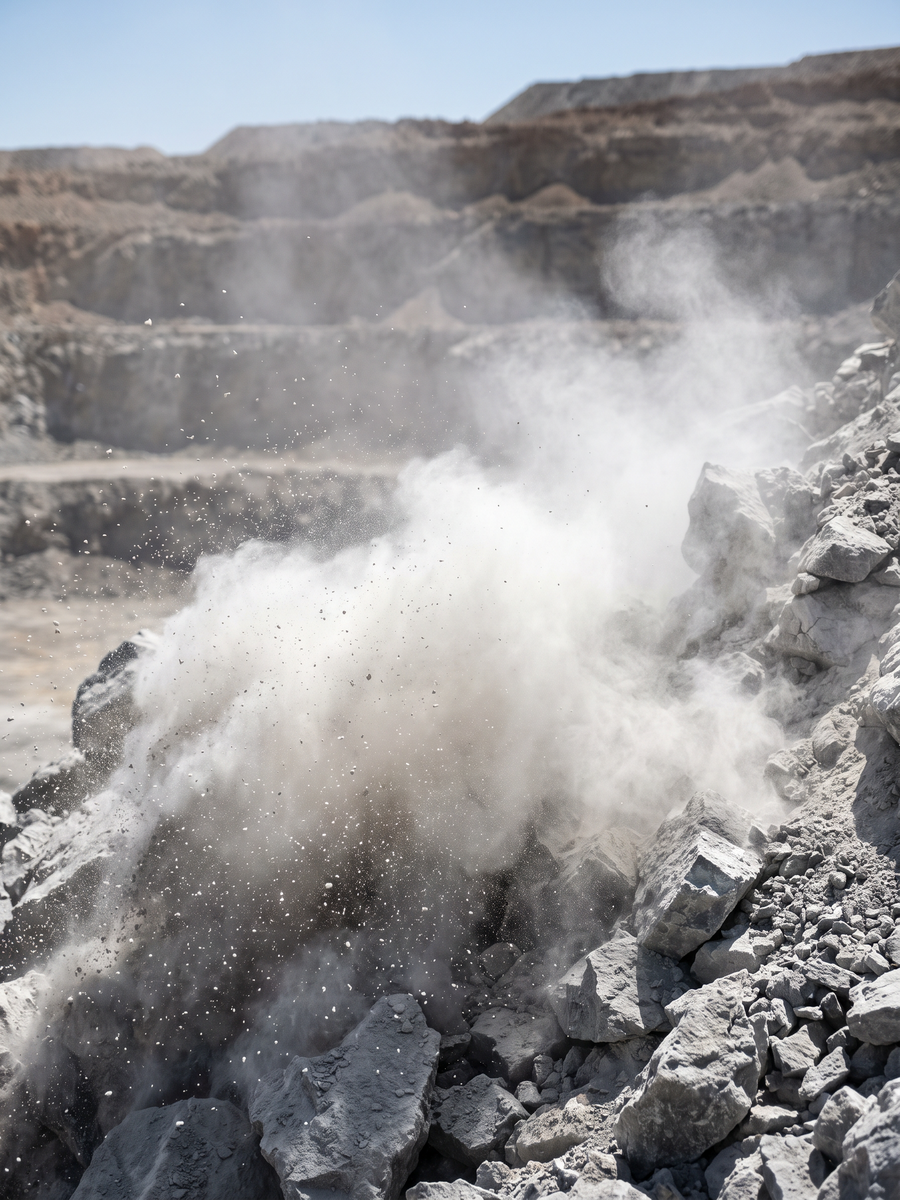
At a Western U.S. aggregates operation, real-time monitoring clocked respirable crystalline silica at up to three times the exposure limit on high-wind days, when wind exceeded roughly 16 miles per hour. The same site was measurably safest inside a mid-range wind window. A quarterly sample taken on a calm day would show compliance. A quarterly sample taken on a windy day might catch the spike, or might not, depending on timing. The data made clear that airborne silica at this operation was driven by environmental conditions a periodic sample rarely catches.
This pattern has practical implications for how you design a worker exposure monitoring program. If your sampling strategy does not account for the conditions that actually drive peak exposure, it will systematically undercount risk on the worst days and overcredit your controls on the best ones. A federally funded research study that deployed APT dust sensors, conducted by NIOSH at an operating mine, demonstrated how continuous, real-time particulate data reveals time-resolved exposure patterns that shift-length gravimetric samples cannot see.
Bridging the Gap Between Periodic and Continuous Data
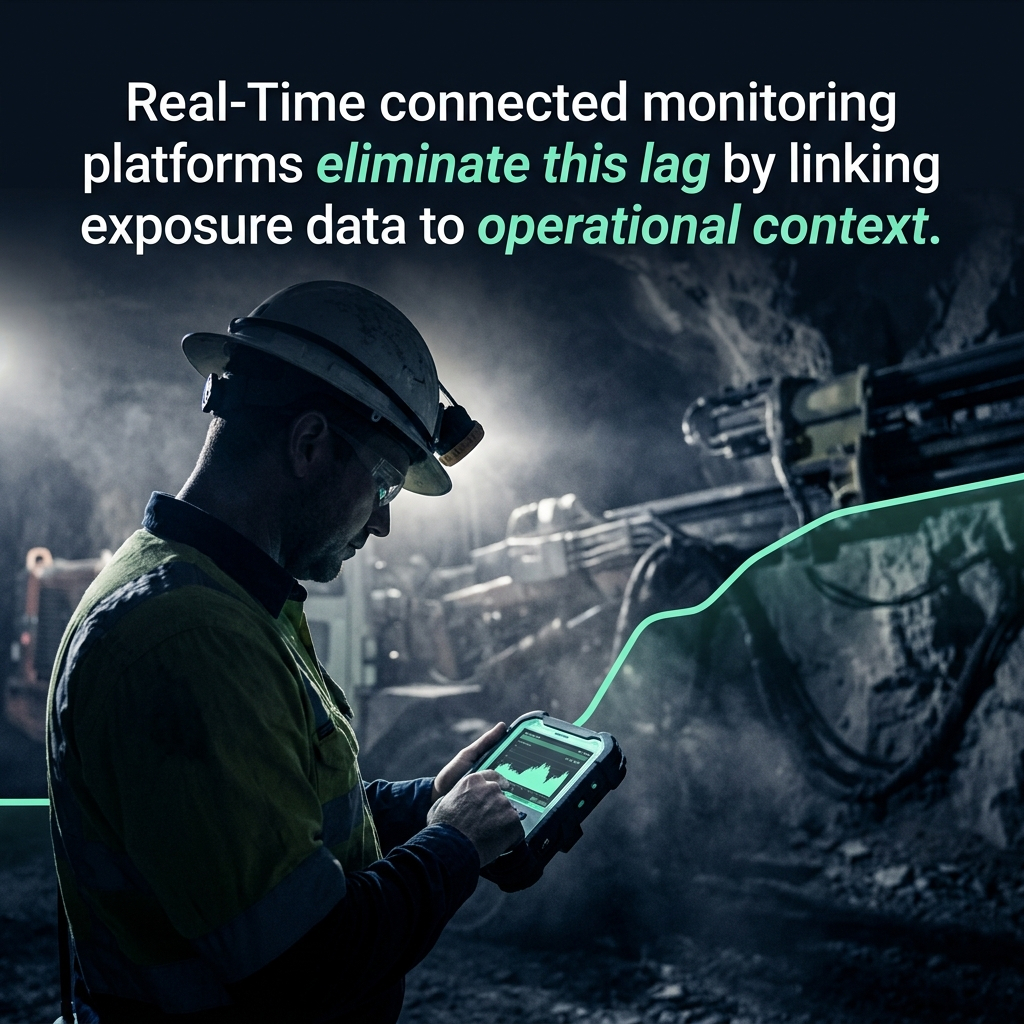
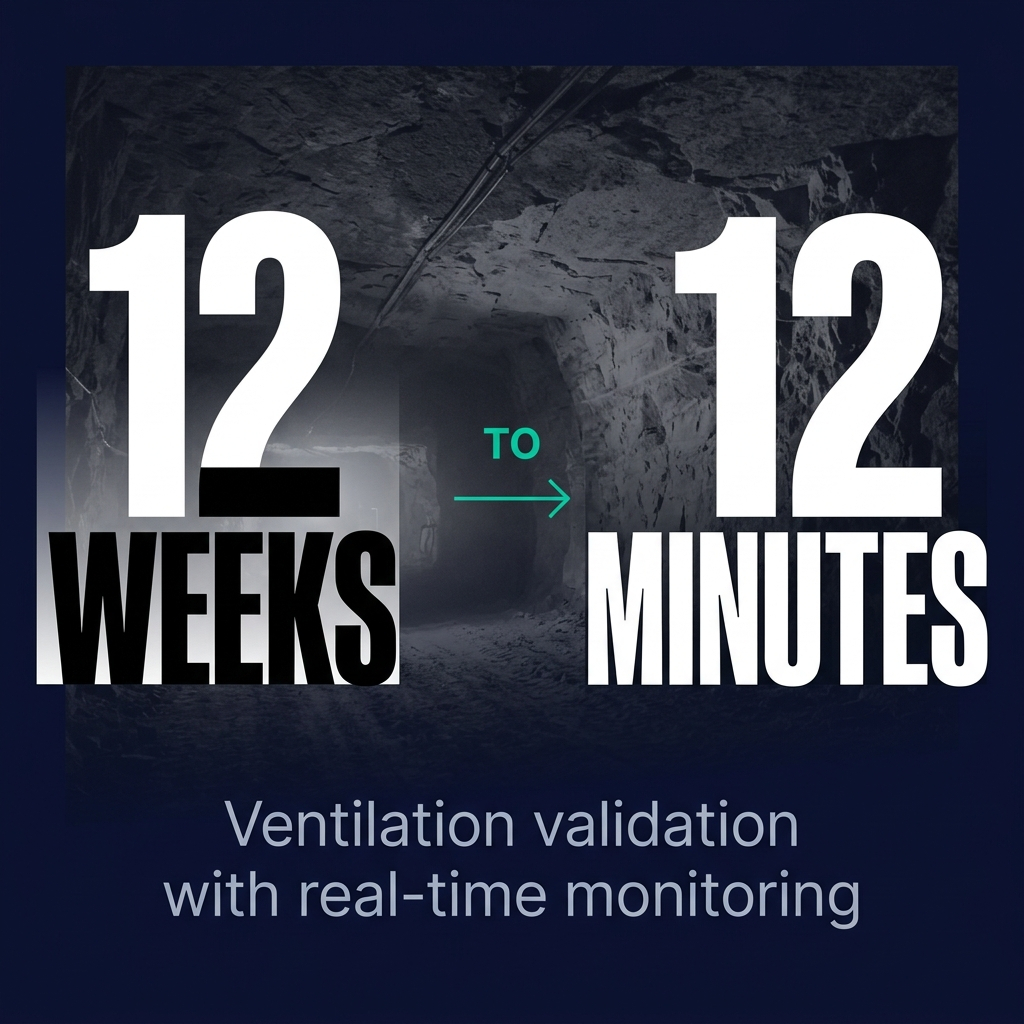
Continuous monitoring does not replace laboratory-grade gravimetric and XRD analysis. It fills the temporal gaps between those samples. When you can see minute-by-minute dust concentrations correlated with wind speed, task activity, and equipment status, you gain the ability to identify which conditions produce overexposures and intervene on the same shift. That feedback loop, condition identification to corrective action to verification, collapses from weeks to hours. Building an industrial hygiene program around that kind of continuous data changes the function from retrospective compliance checking to real-time risk management.
Applied Particle Technology's sensor and software platform provides that continuous feedback by pairing real-time dust monitors with condition data (wind, task, location) so operations teams can see what drives exposure, not just whether a shift average stayed under the limit.
Frequently Asked Questions
Q: What controls should I prioritize first to reduce silica exposure on active job sites?
A: Start with engineering controls that prevent dust from becoming airborne, such as water delivery at the point of generation and local exhaust ventilation with HEPA filtration. Pair those with administrative controls like task scheduling and exclusion zones, then use respiratory protection as a final layer when exposures cannot be reliably controlled.
Q: How do I select the right respirator for silica-related tasks?
A: Choose a respirator based on measured or anticipated exposure levels and the required assigned protection factor (APF), then confirm the model is compatible with other PPE. A formal respiratory protection program, including fit testing and cartridge changeout rules, is essential to make the protection real in the field.
Q: How can I use real-time dust data without overreacting to every short spike?
A: Set decision rules in advance, for example spike duration thresholds, task-specific alert levels, and escalation steps tied to controls you can actually adjust. Trend the data by task, location, and shift to distinguish one-off anomalies from repeatable patterns that warrant process changes.
Q: What should a silica medical surveillance program typically include?
A: Medical surveillance commonly includes baseline and periodic evaluations focused on respiratory health, with testing determined by applicable regulations and the worker’s exposure profile. Use the results to improve controls and job assignments, while maintaining confidentiality and clear employee communication.
Q: What training topics help workers make better silica decisions during the shift?
A: Focus training on recognizing high-dust tasks, verifying controls are functioning (water flow, shrouds, seals, housekeeping), and knowing when to stop work or escalate. Practical refreshers, short toolbox talks, and supervisor coaching usually outperform annual, slide-based training alone.
Q: How do I investigate a suspected overexposure when there is no recent lab result?
A: Reconstruct the shift conditions, including tasks performed, locations, weather, equipment status, and control performance, then compare them to your known high-risk scenarios. Document corrective actions immediately, and schedule targeted follow-up sampling or focused monitoring under similar conditions to verify improvement.
Q: How should I communicate silica risk to non-technical stakeholders like project owners or community members?
A: Emphasize what you control operationally, such as dust suppression, equipment enclosures, traffic management, and verification monitoring, rather than technical sampling jargon. Share clear commitments, simple metrics, and what triggers corrective action, so stakeholders understand both risk reduction and accountability.
From Mineral Knowledge to Operational Control
Crystalline silica becomes a health hazard only when mechanical energy fractures it into respirable particles and site conditions carry those particles into a worker's breathing zone. The mineral is everywhere. The risk is conditional. Knowing the difference between bulk silica content and the respirable fraction, understanding the inflammatory cascade that makes even short exposures consequential, and recognizing that wind, task changes, and suppression gaps produce the spikes that periodic sampling misses: these form the foundation of an effective silica management program.
If your current program relies on quarterly samples alone, the data from that Western U.S. aggregates site should give you pause. The highest exposures correlated with conditions no fixed sampling schedule can reliably capture. Continuous, condition-linked monitoring closes that gap.
Book a personalized demo to see how real-time silica monitoring from Applied Particle Technology connects particle data to the wind, task, and equipment conditions that actually drive your exposure profile.
Take a tour of APT's dust management platform

Vulcan Materials Company is the nation’s largest producer of construction aggregates.

Project partner
Brent Leclerc | Environmental Manager
Problems solved
Unjustified community dust complaints & lawsuits
Difficulty complying with opacity regulations and risk of NOVs
Solution
Real-time dust monitoring
Dust maps proving no community impact, preventing fines & lawsuits
Real-time opacity monitoring, high degree of compliance



Better decisions start with real-time insight
APT helps industrial teams move faster, act smarter, and stay compliant—because when you can see the problem clearly, you can solve it confidently.
