Respirable crystalline silica kills more workers each year than most safety managers realize. Unlike the dramatic hazards that grab headlines, this one operates quietly: microscopic particles lodge deep in lung tissue, and the damage often doesn't surface for a decade or more. By the time symptoms appear, the disease is irreversible.
This guide breaks down what respirable crystalline silica actually is, where it shows up across mining and industrial operations, the health consequences of prolonged exposure, and the regulatory limits that govern how much is too much. You'll also find a practical walkthrough of monitoring methods and the engineering controls that keep workers on the right side of those limits.
What Is Respirable Crystalline Silica?
Silicon dioxide (SiO₂) is one of the most abundant minerals on earth. It exists in two primary forms: amorphous and crystalline. The crystalline form has a highly ordered molecular structure that makes it far more dangerous to human tissue.
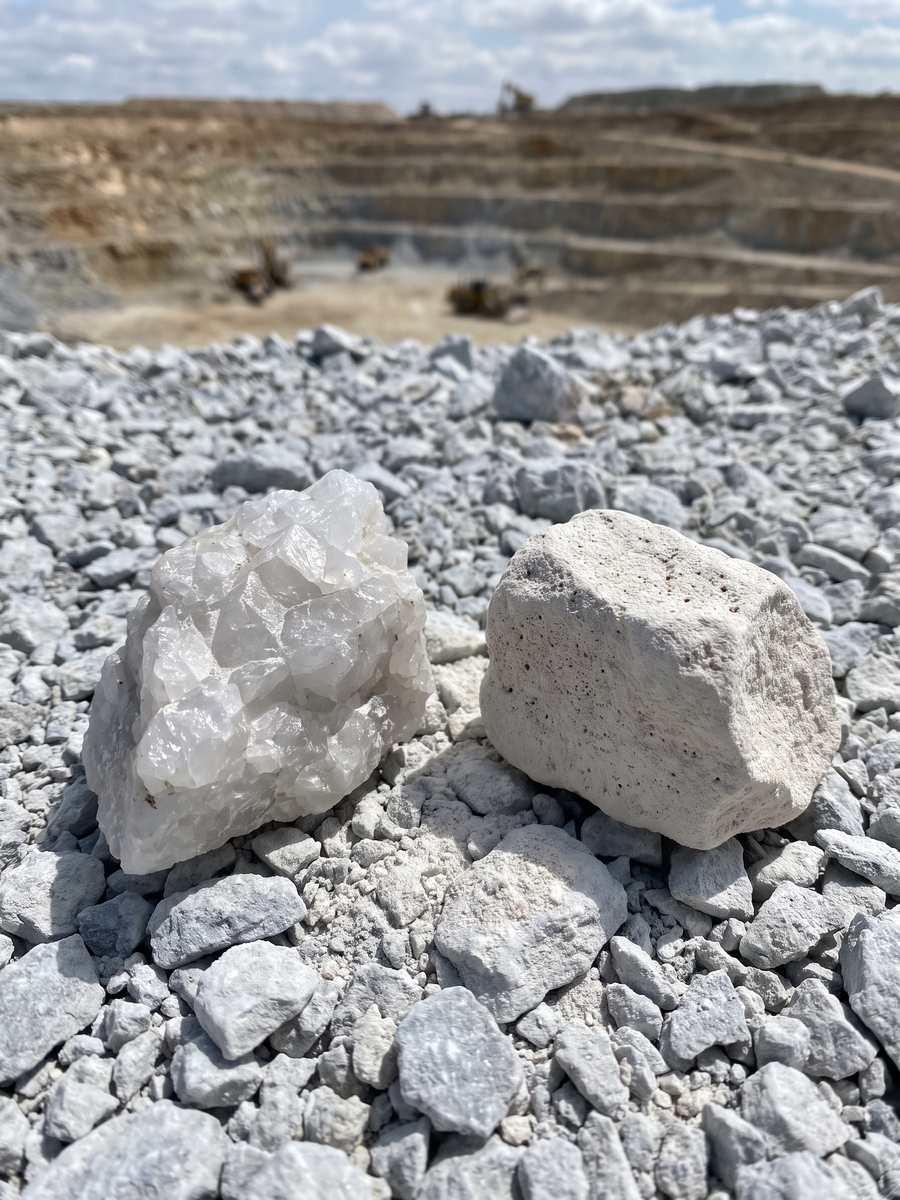
Quartz is the most common variety of crystalline silica. Cristobalite and tridymite are less common but equally hazardous. When workers cut, crush, drill, or blast materials containing these minerals, the mechanical energy breaks the material into extremely fine particles.
Why Particle Size Matters
The "respirable" designation refers to particles small enough to bypass the body's natural defenses. Specifically, these are particles smaller than 10 micrometers in aerodynamic diameter, with the most dangerous fraction falling below 4 micrometers. For context, a human hair is roughly 70 micrometers wide.
Larger dust particles get trapped in your nose and throat, where cilia and mucus can expel them. Respirable-sized particles travel past the bronchi and settle in the alveoli, the tiny air sacs where oxygen exchange happens. Once there, the body cannot effectively clear them. The crystalline structure triggers a chronic inflammatory response that progressively scars lung tissue.
Where Is RCS Found in Industrial Operations?
Crystalline silica isn't limited to a single industry. It appears anywhere workers disturb natural stone, sand, concrete, or engineered materials containing quartz. The concentration varies by material and task, but the common thread is mechanical disruption that generates airborne dust.
Mining
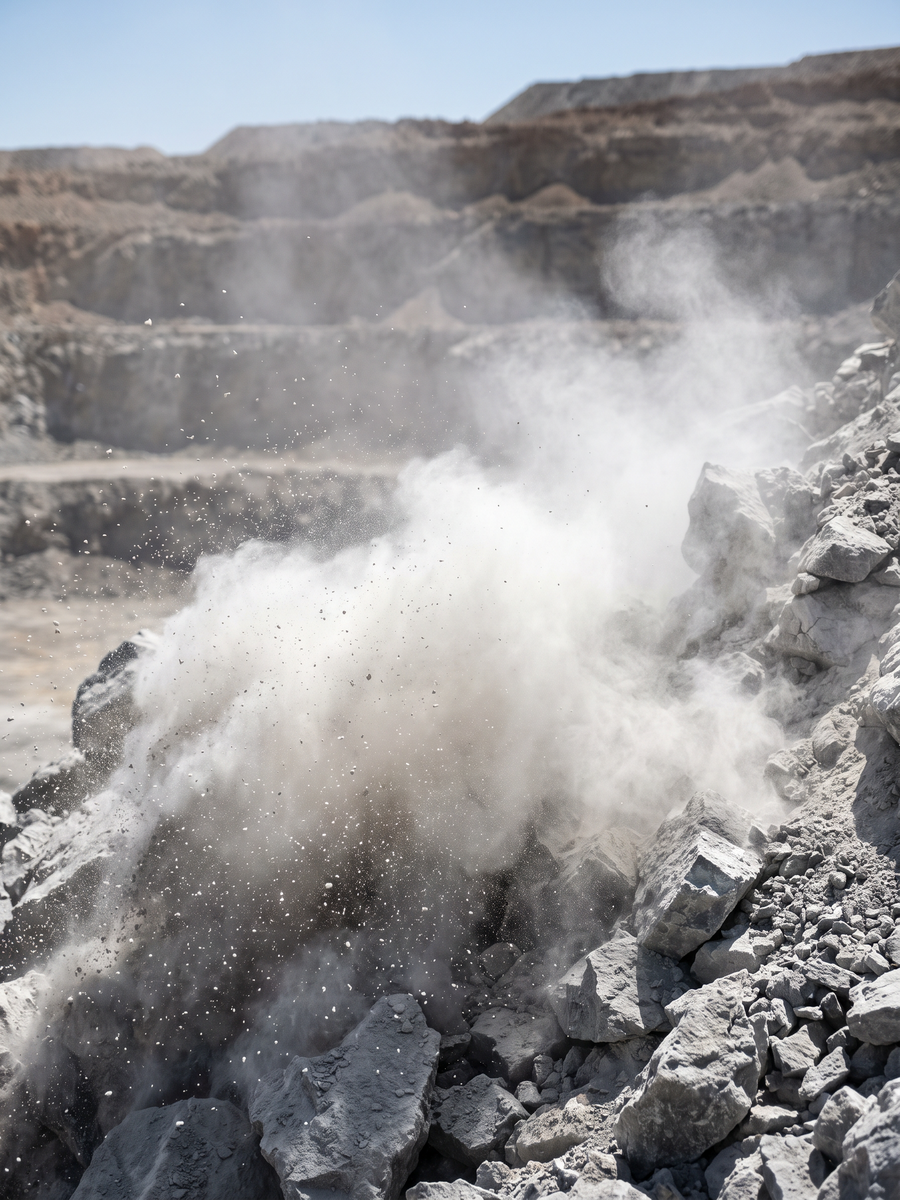
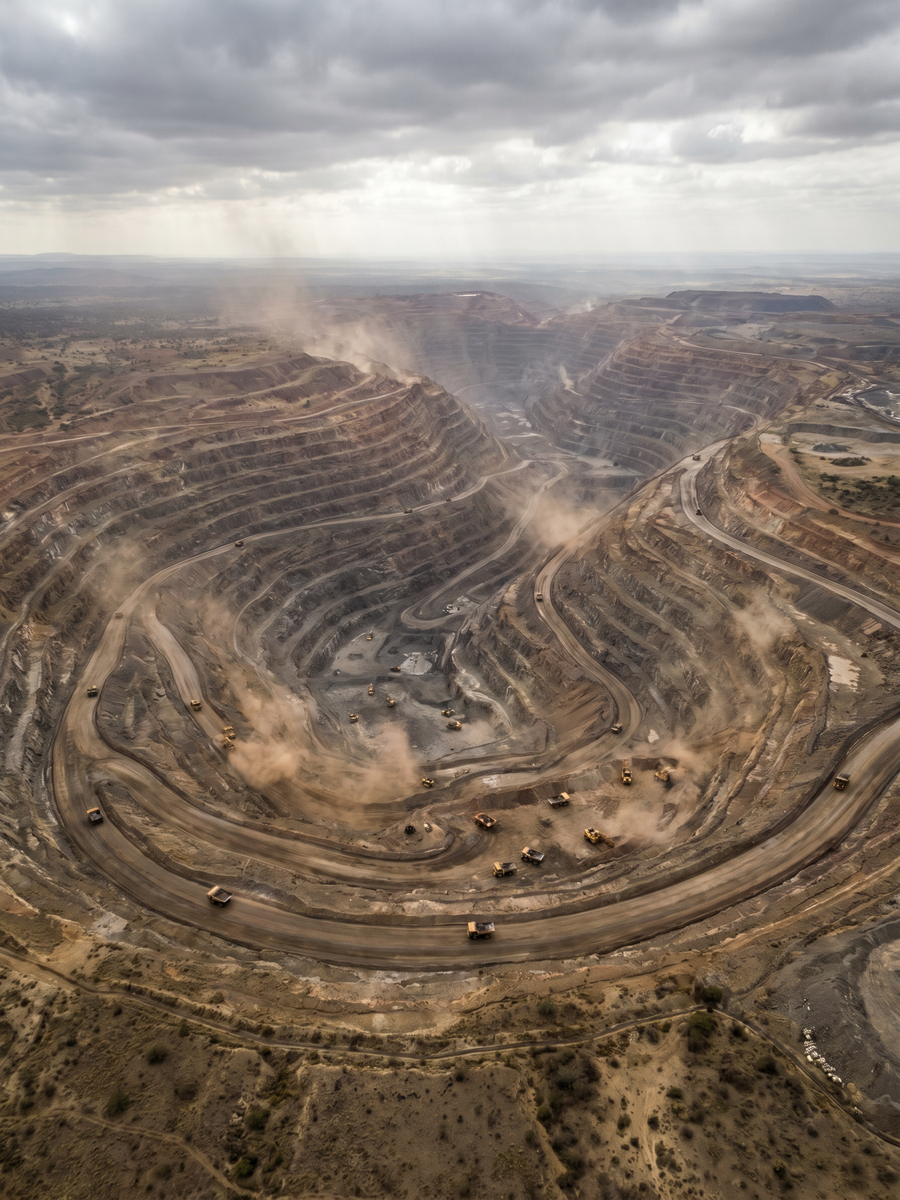
Mining operations generate some of the highest respirable crystalline silica exposures documented in occupational health literature. Surface mines produce heavy dust loads during drilling, blasting, hauling, and crushing. Underground operations concentrate that dust in enclosed spaces with limited ventilation.
Metal and non-metal mines face particular scrutiny. Gold, copper, and aggregate operations frequently encounter quartz-bearing rock formations. The 2024 MSHA final rule specifically targets these operations, reflecting years of data showing that existing controls weren't adequately protecting miners. Understanding the requirements of the MSHA silica standard is now a baseline expectation for every mine operator.
Construction
Construction workers face exposure during concrete cutting, masonry work, demolition, and road milling. Handheld grinders and saws generate intense localized dust plumes that can exceed permissible limits within minutes.
An emerging concern involves engineered stone countertops, which can contain 90% or more crystalline silica by weight. Cal/OSHA enforcement data from 2025 inspections revealed that stone-fabrication shops adopting prescribed wet-cutting methods reduced average personal exposure measurements from 120 µg/m³ to 42 µg/m³ within one year. That's a dramatic improvement, but it required rigorous implementation of controls that many smaller shops initially resisted.
Manufacturing
Foundries, glass manufacturers, ceramics producers, and hydraulic fracturing operations all involve silica-bearing materials. Sandblasting, though increasingly restricted, remains one of the highest-exposure tasks in any industry.
Even industries you might not suspect carry risk. Dental laboratories working with porcelain and refractory brick manufacturers both generate respirable crystalline silica. The key question for any operation isn't whether silica is present, but how much becomes airborne during specific tasks.
Health Hazards of RCS Exposure
The health consequences of breathing respirable crystalline silica extend well beyond the lungs. While silicosis is the signature disease, crystalline silica exposure is linked to several other serious conditions. What makes these hazards especially insidious is their latency: workers may feel fine for years while damage accumulates.
Silicosis: Three Distinct Forms
Chronic silicosis develops after 10 or more years of moderate exposure. It's the most common form. Nodular scarring gradually reduces lung capacity, and many workers dismiss early symptoms as aging or poor fitness.
Accelerated silicosis appears within 5 to 10 years of heavier exposure. The progression is faster and the prognosis worse. Workers in poorly controlled abrasive blasting or tunneling operations face this risk.
Acute silicosis can develop within weeks to months of extremely high exposure. It resembles a condition called pulmonary alveolar proteinosis, where the air sacs fill with fluid. This form is rare but often fatal. Recent case clusters among engineered-stone fabricators have renewed attention to this most aggressive variant.
None of these forms are reversible. Once scar tissue replaces functional lung tissue, it doesn't heal. Treatment focuses on slowing progression and managing symptoms.
Lung Cancer
The International Agency for Research on Cancer (IARC) classifies crystalline silica as a Group 1 carcinogen, meaning there is sufficient evidence that it causes cancer in humans. The risk increases with cumulative exposure and is compounded by smoking. Workers with silicosis face an even higher cancer risk than those with equivalent silica exposure but no silicosis diagnosis.
COPD and Kidney Disease
Chronic obstructive pulmonary disease (COPD) develops independently of silicosis in some exposed workers. The inflammatory response triggered by silica particles damages airways and reduces airflow over time.
Kidney disease is a less widely known consequence. Crystalline silica particles that enter the bloodstream can cause renal inflammation and progressive kidney damage. Some studies also link silica exposure to autoimmune conditions, including scleroderma and rheumatoid arthritis, though these associations are still being investigated. The takeaway: understanding the hidden costs of poor silica exposure data goes beyond regulatory fines to include long-term health consequences that affect workers and their families for decades.
Occupational Exposure Limits for Respirable Crystalline Silica
Multiple agencies set exposure limits for crystalline silica, and they don't all agree. Understanding where these limits come from and how they differ helps safety teams build compliance programs that satisfy the strictest applicable standard.
- Agency: OSHA | Limit Type: PEL | Concentration (µg/m³): 50 | Basis: 8-hour TWA
- Agency: MSHA (2024 Rule) | Limit Type: PEL | Concentration (µg/m³): 50 | Basis: 8-hour TWA
- Agency: MSHA (2024 Rule) | Limit Type: Action Level | Concentration (µg/m³): 25 | Basis: 8-hour TWA
- Agency: NIOSH | Limit Type: REL | Concentration (µg/m³): 50 | Basis: Up to 10-hour TWA
- Agency: ACGIH | Limit Type: TLV | Concentration (µg/m³): 25 | Basis: 8-hour TWA
MSHA's 2024 final rule represents the most significant regulatory shift for the mining sector. According to MSHA's stakeholder meeting materials, the permissible exposure limit is now 50 µg/m³ with an action level of 25 µg/m³, both measured as an 8-hour time-weighted average. The action level is the critical threshold: once a sample hits 25 µg/m³, operators must initiate periodic monitoring and medical surveillance.
A practical note: the ACGIH TLV of 25 µg/m³ isn't legally enforceable in the way OSHA and MSHA limits are, but many progressive operations use it as their internal target. Meeting the stricter ACGIH threshold provides a built-in safety margin against regulatory exceedances. If you're building a compliance program from scratch, I'd recommend targeting the ACGIH level and treating the OSHA/MSHA PEL as a hard ceiling rather than a goal. Keeping current with the latest MSHA silica rule updates ensures your program reflects enforceable requirements as they evolve.
How RCS Exposure Is Measured
Accurate measurement is the foundation of any silica control program. You can't manage what you can't quantify, and silica monitoring comes with specific technical challenges that differentiate it from general dust sampling.
Gravimetric Sampling
Traditional gravimetric sampling remains the regulatory gold standard. A worker wears a sampling pump connected to a cyclone pre-selector that captures only respirable-fraction particles on a pre-weighed filter. After the sampling period (typically a full shift), the filter goes to an accredited lab for analysis using X-ray diffraction (XRD) or infrared spectroscopy (IR).
This method is precise and legally defensible. It's also slow. Results typically take one to three weeks to return, meaning a worker could accumulate significant additional exposure before anyone knows a shift exceeded limits. EPA's FY 2025-2026 National Program Guidance reinforces the importance of data quality, with pilot implementation at 27 industrial monitoring networks showing that disciplined QA/QC protocols achieved 98% data-capture rates and identified 14 sites exceeding action thresholds.
Real-Time Monitoring
Real-time dust monitors address the delay problem by providing continuous or near-continuous particulate concentration readings. These devices use light-scattering technology to estimate dust levels as work happens, giving supervisors the ability to intervene during a shift rather than weeks after the fact.
The trade-off is that most real-time monitors measure total respirable dust, not crystalline silica specifically. Converting those readings into silica estimates requires site-specific calibration against gravimetric results. When done properly, this hybrid approach gives you the legal defensibility of lab analysis plus the operational responsiveness of real-time data.
NIOSH has actively studied how modern sensor technology performs under field conditions. Their work with APT dust sensors in a silica monitoring study highlights how pairing real-time instruments with gravimetric validation creates a more complete exposure picture than either method alone. Applied Particle Technology's platform integrates these real-time readings with intelligent software that turns raw sensor data into actionable compliance insights for mining and industrial teams.
Proven Strategies to Reduce RCS Exposure
Effective silica control follows the hierarchy of controls, but the real challenge isn't knowing the hierarchy. It's implementing controls that work under actual operating conditions, not just on paper.
Elimination and substitution sit at the top. Where possible, replace silica-containing materials with lower-silica alternatives. This works in some manufacturing contexts but rarely applies in mining, where the geology dictates the dust composition.
Engineering controls deliver the most impact for mining and heavy industry. Wet suppression systems reduce airborne dust at the source. Enclosed operator cabs with filtered air supplies protect workers at drilling and crushing stations. Local exhaust ventilation captures dust before it disperses into the breathing zone. MSHA's 2024 final rule has already prompted large surface-mine operators to retrofit drills and crushers with high-efficiency dust-collection systems. Comprehensive mining dust control programs combine multiple engineering solutions tailored to each operation's specific dust sources.
Administrative controls supplement engineering measures. Rotating workers through high-exposure tasks limits individual cumulative dose. Scheduling dusty operations during off-peak hours or favorable wind conditions reduces bystander exposure. Written exposure control plans formalize these practices and create accountability.
Respiratory protection remains the last line of defense. Half-mask respirators with P100 filters or powered air-purifying respirators (PAPRs) protect workers during tasks that exceed limits despite other controls. Fit-testing and training are non-negotiable. A respirator that doesn't seal properly provides a false sense of security.
One honest caveat: many operations over-rely on respirators because they're cheaper and faster to deploy than engineering controls. That approach fails over time. Workers experience respirator fatigue, compliance drops during hot weather, and enforcement becomes a constant battle. Investing in engineering controls upfront costs more but produces more reliable long-term results. Operations focused on reducing silica exposure under MSHA requirements consistently find that sensor-driven engineering controls outperform respirator-only programs.
Applied Particle Technology's dust management platform brings these strategies together by connecting real-time sensor data with software that identifies exactly where and when exposures spike. Rather than waiting weeks for lab results, operations teams can see which tasks and locations exceed thresholds and deploy targeted controls the same day. That speed turns compliance from a reactive scramble into a proactive system.
Frequently Asked Questions
Q: How do I decide whether to run personal sampling, area sampling, or both?
A: Use personal sampling to evaluate individual worker exposure for compliance and health risk decisions, then add area sampling to pinpoint where controls or housekeeping need improvement. Running both helps you connect exposure outcomes to specific locations and activities without guessing.
Q: What should be included in a written silica exposure control plan?
A: A strong plan documents high-risk tasks, responsible owners, required controls by task, maintenance and inspection routines, and training requirements. It should also outline how you will verify performance, including monitoring frequency, trigger thresholds, and corrective action steps.
Q: How can I prioritize which tasks to control first if we have limited budget?
A: Rank tasks by a combination of exposure severity, number of workers affected, and time spent performing the task. Start with interventions that reduce exposure for the most people and are easiest to sustain operationally, then expand controls as you validate results.
Q: How often should engineering controls like wet suppression or ventilation be inspected and maintained?
A: Set routine inspection intervals based on manufacturer guidance and how critical the control is to keeping exposures down, then tighten the schedule for harsh or high-use environments. Track leading indicators such as pressure drops, flow rates, nozzle condition, and filter integrity so you catch failures before exposure rises.
Q: What training topics should supervisors and crews receive beyond basic hazard awareness?
A: Focus training on task-specific behaviors that prevent dust generation, early signs of control failure, and how to respond when conditions change (weather, material moisture, equipment issues). Include practical refreshers on correct respirator use, cleaning practices that avoid re-aerosolizing dust, and when to escalate to maintenance or safety.
Q: How do I handle contractors and short-term crews who move between sites?
A: Require pre-qualification that includes silica controls, training documentation, and equipment standards, then verify on site through onboarding and periodic field observations. Align expectations in contracts so accountability for controls, monitoring cooperation, and corrective actions is clear from day one.
Q: What metrics should leadership track to know the silica program is improving over time?
A: Track leading indicators such as control uptime, maintenance completion rates, and the percentage of high-risk tasks performed with required controls in place. Pair those with lagging indicators like exposure exceedance frequency, repeat exceedances by task, and corrective action closure time to ensure progress is real and sustained.
Building a Silica Program That Actually Works
Respirable crystalline silica demands a program built on accurate data, the right engineering controls, and consistent monitoring. Regulations will only tighten from here. The operations that invest now in understanding their exposure profiles will spend less time scrambling when the next rule change hits.
Start with baseline gravimetric sampling to understand your site's silica concentrations. Layer in real-time monitoring to catch exceedances as they happen. Use that data to prioritize engineering controls where they'll have the greatest impact. Then verify your controls are working through ongoing MSHA silica compliance monitoring.
Applied Particle Technology helps mining and industrial operations close the gap between collecting dust data and acting on it. Our platform combines real-time sensors with intelligent software that delivers targeted, defensible insights, giving your safety team the information they need to protect workers and stay ahead of regulatory requirements. Visit Applied Particle Technology to see how real-time monitoring transforms your silica management program.
Take a tour of APT's dust management platform

Vulcan Materials Company is the nation’s largest producer of construction aggregates.

Project partner
Brent Leclerc | Environmental Manager
Problems solved
Unjustified community dust complaints & lawsuits
Difficulty complying with opacity regulations and risk of NOVs
Solution
Real-time dust monitoring
Dust maps proving no community impact, preventing fines & lawsuits
Real-time opacity monitoring, high degree of compliance


.png)
Better decisions start with real-time insight
APT helps industrial teams move faster, act smarter, and stay compliant—because when you can see the problem clearly, you can solve it confidently.
