Crystalline silica is one of the most abundant minerals on the planet, and it sits in virtually every material your operation touches. Quartz in aggregate, cristobalite in thermally processed ore, tridymite in volcanic rock: all three are polymorphs of silicon dioxide arranged in a repeating lattice structure. In bulk form, a chunk of sandstone or a slab of concrete poses no inhalation threat. The hazard begins the moment a saw blade, crusher, drill bit, or wind event fractures that lattice into particles small enough to bypass every defense the human respiratory system has.
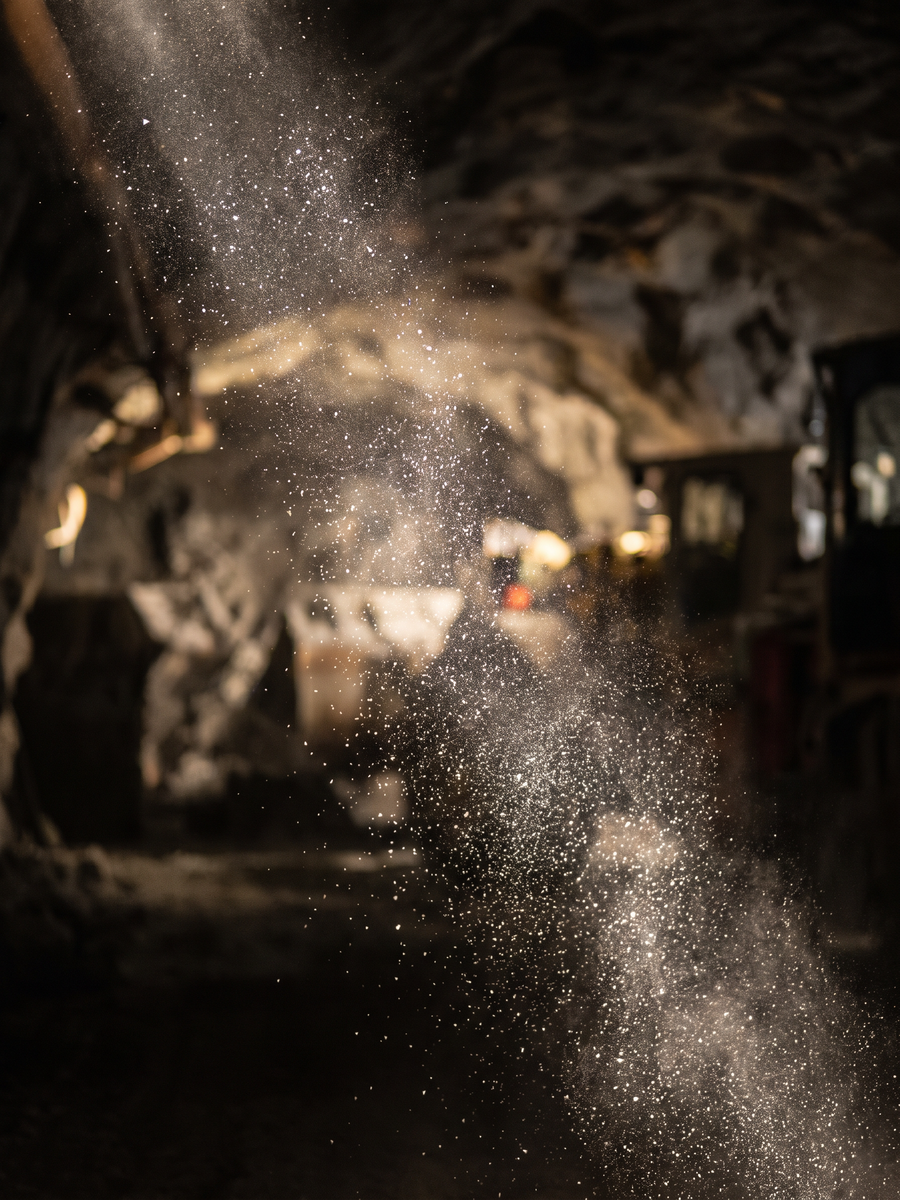
What separates a benign mineral from a recognized carcinogen is a single variable: particle size. The fraction that matters, the respirable fraction, includes particles roughly 4 micrometers and smaller. These particles are invisible to the naked eye, orders of magnitude smaller than a grain of sand, and light enough to stay suspended in air for hours. They follow air currents deep into the gas-exchange region of the lungs, where no cough reflex or mucociliary clearance can remove them. Understanding that distinction, between the rock in your hand and the dust you cannot see, is where effective exposure control begins.
What Is Crystalline Silica and Where Does It Occur?
Silicon dioxide (SiO₂) exists in both amorphous and crystalline forms. The crystalline forms arrange silicon and oxygen atoms in a fixed, repeating three-dimensional lattice. That ordered structure is what makes crystalline silica biologically persistent once it reaches lung tissue: the body cannot dissolve it.
Mineral Forms: Quartz, Cristobalite, and Tridymite
Quartz is by far the most common polymorph and the one most industrial operations encounter. It is a primary component of sand, sandstone, granite, and most concrete and mortar mixes. Cristobalite forms when quartz is heated above roughly 1,470 °C, which means it shows up in foundry operations, kiln-fired ceramics, and calcined diatomaceous earth. Tridymite is rarer in occupational settings but can appear in volcanic deposits and certain thermally altered ores.
The International Agency for Research on Cancer classifies quartz and cristobalite as Group 1 carcinogens, meaning sufficient evidence confirms they cause cancer in humans. That classification applies specifically to inhaled respirable particles, not to the mineral sitting in a stockpile.
Materials and Operations That Contain Silica
Silica content varies by material. Sandstone can exceed 90% quartz by weight. Granite typically runs 25% to 40%. Concrete and mortar contain variable percentages depending on the aggregate source. Even materials you might not suspect, like certain iron ores,ite processing byproducts, andite drilling muds, carry enough quartz to generate a respirable hazard when mechanically disturbed.
Any task that fractures a silica-bearing material generates respirable dust: cutting concrete with an abrasive blade, crushing stone in a jaw or cone crusher, drilling blast holes in sandstone, grinding mortar joints, and hauling aggregate on unpaved roads. For a deeper breakdown of task-specific exposure scenarios across mining and industrial settings, the complete guide to respirable crystalline silica in mining and industrial operations covers each in detail.
The Respirable Fraction: Why Particle Size Determines Risk
Bulk silica content tells you what is in the rock. It does not tell you what reaches a worker's lungs. That answer depends entirely on the particle-size distribution of the airborne dust, and specifically on the fraction that falls within the respirable range.
The 50% Cut Point at Roughly 4 Micrometers
Occupational hygiene defines the respirable fraction using a size-selective sampling convention. The 50% cut point sits at roughly 4 micrometers, meaning a respirable dust sampler collects 50% of particles at that diameter, with collection efficiency increasing as particle size decreases. Particles at 1 micrometer are collected with near-total efficiency. Particles above 10 micrometers are excluded almost entirely.
NIOSH defines crystalline silica in occupational terms as a common mineral that becomes a health hazard when work activities generate respirable-sized particles. Two materials with identical bulk quartz content can produce wildly different respirable fractions depending on how they are processed. A wet-cut concrete slab releases a fraction of the respirable dust that a dry-cut slab does. The material is the same; the conditions are not.
Standard analytical methods for quantifying respirable crystalline silica, NIOSH NMAM 7500 using X-ray diffraction and NMAM 7602 using infrared spectrophotometry, both analyze filter cassettes collected through size-selective cyclones. The sampling hardware enforces the respirable convention before the lab ever sees the sample.
Why Material Presence Does Not Equal Exposure
A stockpile of sand sitting undisturbed on a calm day produces negligible airborne respirable dust. That same stockpile during a high-wind event, or when a front-end loader cuts into it, can generate concentrations that exceed regulatory limits within minutes. The silica content of the sand has not changed. The conditions have.
This distinction matters for how you design your monitoring and control strategy. Knowing the quartz percentage in your aggregate is necessary but insufficient. You need to understand which tasks, weather conditions, and operational states drive the respirable fraction into the breathing zone. Understanding how respirable dust particle size relates to hazard thresholds and exposure limits is the operational bridge between geology and health risk.
The Health Pathway: From Inhaled Particle to Disease
Once a respirable crystalline silica particle deposits in the alveolar region of the lung, it triggers a biological cascade that the body cannot resolve. The particle's crystalline surface is cytotoxic, meaning it kills cells on contact.
Macrophage Response and Progressive Fibrosis
Alveolar macrophages, the lung's primary immune scavengers, engulf the silica particle. The particle's surface chemistry destroys the macrophage, releasing inflammatory signals and the intact particle back into the tissue. New macrophages arrive and repeat the cycle. This persistent inflammation triggers fibroblast activation and collagen deposition: scar tissue that progressively replaces functional lung tissue.
That scarring is silicosis, and it is irreversible. Chronic silicosis develops over 10 to 20 years of lower-level exposure. Accelerated silicosis appears within 5 to 10 years at higher concentrations. Acute silicosis, rare but devastating, can develop within weeks to months of extremely high exposure and resembles pulmonary alveolar proteinosis.
OSHA connects respirable crystalline silica exposure to four serious diseases: silicosis, lung cancer, chronic obstructive pulmonary disease (COPD), and kidney disease. The current permissible exposure limit stands at 50 micrograms per cubic meter as an 8-hour time-weighted average, with an action level at 25 micrograms per cubic meter under standards 29 CFR 1910.1053 for general industry and 1926.1153 for construction. MSHA's 2024 silica rule aligns metal/nonmetal mining to the same PEL of 50 and action level of 25, with the metal/nonmetal provisions now in effect and the coal portion stayed.
Why Conditions Drive Exposure That Periodic Sampling Cannot See
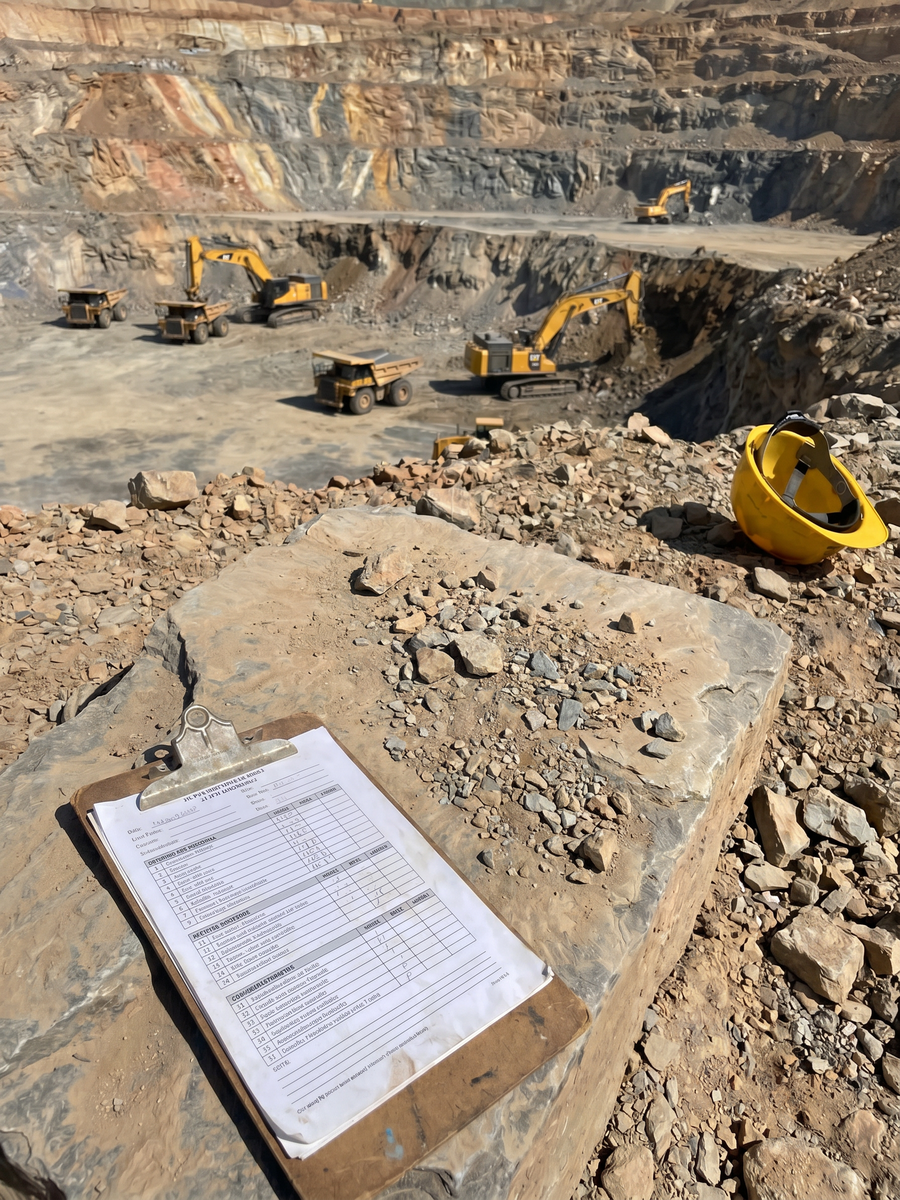
A traditional compliance sample captures a single 8-hour time-weighted average on one day. That value represents the arithmetic mean of every exposure second across the shift, including low-exposure periods that dilute the peaks. If the sampling day happens to fall during moderate weather and routine production, the result may look compliant. It says nothing about what happened last Tuesday when wind gusted through the crusher circuit, or next Thursday when a haul road dries out after rain.
Wind-Driven Exposure Variability: A Field Example
At a Western U.S. aggregates operation, real-time monitoring clocked respirable crystalline silica at up to three times the exposure limit on high-wind days, specifically when wind exceeded roughly 16 miles per hour. The same site was measurably safest inside a mid-range wind window. This is exposure driven entirely by environmental conditions, the kind of variability a quarterly sample rarely catches.
That pattern would be invisible in a traditional sampling program. A quarterly full-shift sample has a 1-in-90 chance of landing on any given day. If the high-wind events cluster around seasonal weather patterns or coincide with specific production schedules, you can run compliant sampling results while workers accumulate significant dose on the days nobody is measuring.
Closing the Gap Between Samples
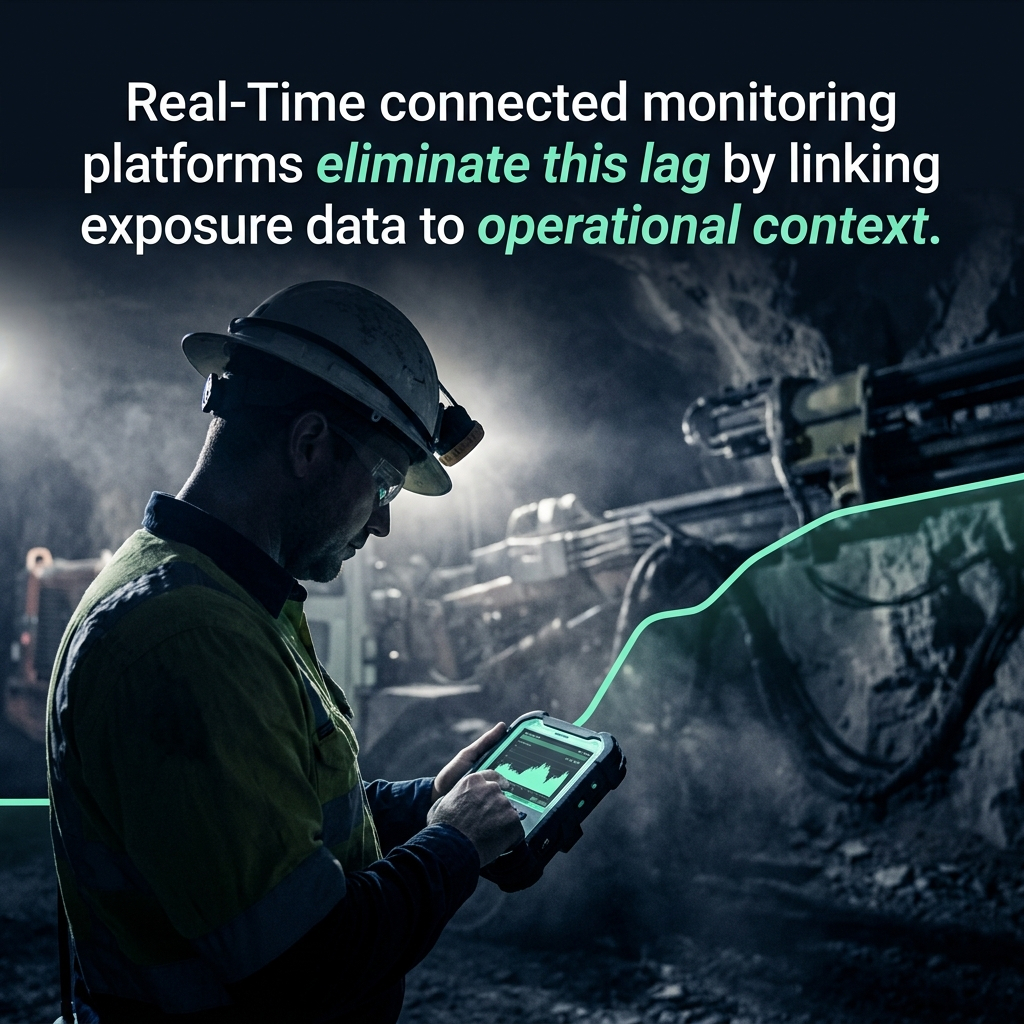
Continuous monitoring fills the temporal blind spots that periodic sampling leaves open. A federally funded research study that deployed APT dust sensors, conducted by NIOSH researchers, demonstrated how real-time dust monitors generate the spatial and temporal granularity that traditional methods cannot provide. Rather than one data point per quarter, operations gain thousands of readings per shift, correlated with wind speed, task state, and equipment activity.
That granularity transforms how industrial hygiene programs function. Instead of reacting to a lab result three weeks after the exposure occurred, teams can identify which conditions produce exceedances, then target controls to those specific scenarios. Wet suppression during the high-wind window. Modified haul patterns when ambient conditions push dust toward the breathing zone. Worker exposure monitoring shifts from a compliance exercise to an operational feedback loop.
Frequently Asked Questions
Q: Who should be involved in a respirable silica risk review, beyond safety and industrial hygiene?
A: Include operations, maintenance, and site leadership because day-to-day decisions about equipment upkeep, production pacing, and traffic flow often determine whether dust controls perform as intended. In union settings, worker representatives can also improve adoption by validating practicality and fit.
Q: How can I prioritize which tasks to tackle first if we cannot control everything at once?
A: Start with a simple risk ranking that combines exposure likelihood, number of workers affected, and duration or frequency of the task. Focus first on repetitive tasks that involve aggressive material handling or create persistent dust clouds in shared work areas.
Q: What is the difference between personal exposure monitoring and area monitoring, and when do you use each?
A: Personal monitoring estimates what a worker actually inhales over time, which is essential for role-based risk decisions. Area monitoring helps identify where emissions originate and how they move through the site, which is useful for troubleshooting controls and managing bystander exposure.
Q: How do I translate dust monitoring results into specific, actionable controls?
A: Tie monitoring data to the moment a task, location, or equipment state changes, then define a response plan for that trigger (for example, adjust ventilation, modify traffic routes, or pause a dust-generating activity). Pre-assign owners and thresholds so the response is consistent, not improvised.
Q: What training topics help workers reduce silica exposure without slowing production?
A: Emphasize recognition of visible and invisible dust sources, correct use and basic checks of control measures, and how to report failing controls early. Training is most effective when it uses site-specific scenarios and gives workers clear stop, fix, and escalate steps.
Q: When is respiratory protection appropriate, and how do I avoid overreliance on it?
A: Respirators are appropriate during short-term high-risk tasks, maintenance interventions, or when engineering controls are being installed or repaired. Use them as part of a layered plan, then track where respirator use is recurring because that usually indicates a control gap worth fixing upstream.
Q: What operational KPIs can indicate silica risk trends before compliance results arrive?
A: Track leading indicators such as control uptime, water or suppression system availability, housekeeping completion rates, and near-miss reports tied to dust events. Pair these with production and weather logs so you can spot patterns and intervene earlier.
From Mineral Knowledge to Exposure Control
Crystalline silica is a straightforward hazard in one sense: the mineral is well characterized, the disease pathway is well documented, and the regulatory limits are clearly defined. The complexity lives in the conditions. Wind, task type, equipment state, material moisture, and a dozen other variables interact to determine whether a given minute of work produces negligible exposure or three times the limit.
Periodic sampling gives you a snapshot. Conditions give you the full picture. Bridging that gap requires instrumentation that runs continuously and correlates dust concentration with the operational and environmental variables that drive it. If your current program relies on quarterly samples to characterize a hazard that shifts with every weather front, you have a measurement gap that no amount of lab precision can close.
Book a personalized demo to see how continuous, condition-correlated monitoring reveals the exposure patterns your current sampling program misses.
Take a tour of APT's dust management platform

Vulcan Materials Company is the nation’s largest producer of construction aggregates.

Project partner
Brent Leclerc | Environmental Manager
Problems solved
Unjustified community dust complaints & lawsuits
Difficulty complying with opacity regulations and risk of NOVs
Solution
Real-time dust monitoring
Dust maps proving no community impact, preventing fines & lawsuits
Real-time opacity monitoring, high degree of compliance


.jpg)
Better decisions start with real-time insight
APT helps industrial teams move faster, act smarter, and stay compliant—because when you can see the problem clearly, you can solve it confidently.
