Crystalline silica and amorphous silica share an identical chemical formula, SiO₂, yet one is classified as a Group 1 carcinogen at the respirable fraction and the other is not. The difference comes down to atomic arrangement. Ordered, repeating lattice structures give crystalline polymorphs their biological persistence in lung tissue, while the disordered network of amorphous forms allows the body to clear them far more readily. If your exposure program treats all silica dust the same, it is built on a flawed premise.
This guide explains how crystal structure determines toxicity, why the respirable fraction is the only fraction that matters for silicosis and lung cancer risk, and where each form of silica shows up in real operations. It also covers how the standard analytical methods tell them apart, and why area dust readings and bulk concentrations routinely point safety teams at the wrong problem.
What Crystalline Silica Is and Why Atomic Structure Matters
Silicon dioxide exists in two broad structural families. In crystalline silica, the silicon and oxygen atoms lock into a repeating, three-dimensional lattice. Quartz is the most common polymorph, followed by cristobalite and tridymite. In amorphous silica, the same atoms bond together without long-range order, producing a glass-like, disordered network.
That structural distinction drives everything downstream: how the particle interacts with lung tissue and which analytical method a laboratory must use to quantify it. The lattice is not an academic curiosity. It is the reason one form of SiO₂ causes progressive, irreversible fibrosis and the other generally does not.
Defining the Two Forms
Crystalline silica features atoms arranged in a fixed, periodic lattice. The International Agency for Research on Cancer classifies inhaled crystalline silica in the form of quartz or cristobalite as a Group 1 carcinogen, meaning sufficient evidence exists for carcinogenicity in humans. Quartz appears in granite, sandstone, and most overburden. Cristobalite forms when amorphous or other silica is heated above roughly 1470 °C for sustained periods, a scenario common in calcining and refractory lining manufacture.
Amorphous silica lacks that repeating lattice. Diatomaceous earth, silica fume, and precipitated silica are typical examples. General toxicity is lower, and regulatory agencies have not classified amorphous silica as a human carcinogen. One important caveat: sustained high-temperature processing (such as calcining diatomaceous earth) can convert amorphous silica into cristobalite, upgrading the hazard from relatively benign to Group 1.
- Property: Atomic structure | Crystalline Silica: Ordered, repeating lattice | Amorphous Silica: Disordered, non-periodic network
- Property: Common polymorphs/forms | Crystalline Silica: Quartz, cristobalite, tridymite | Amorphous Silica: Diatomaceous earth, silica fume, fused silica
- Property: IARC classification (respirable fraction) | Crystalline Silica: Group 1 carcinogen (quartz, cristobalite) | Amorphous Silica: Not classified as a human carcinogen
- Property: Primary health hazard | Crystalline Silica: Silicosis, lung cancer, autoimmune disease | Amorphous Silica: Mild irritation; lower biopersistence in lung tissue
- Property: Common industrial sources | Crystalline Silica: Mining, concrete cutting, sandblasting, countertop fabrication | Amorphous Silica: Filter aids, food-grade additives, thermal insulation
- Property: Analytical method | Crystalline Silica: XRD (NIOSH 7500) or IR (NIOSH 7602) | Amorphous Silica: Gravimetric or bulk chemical analysis
- Property: Heat conversion risk | Crystalline Silica: Already crystalline | Amorphous Silica: Converts to cristobalite under sustained high heat
How Crystalline Silica Damages Lung Tissue
When a particle of respirable crystalline silica lodges in the alveolar region, its ordered surface lattice generates reactive oxygen species on contact with lung fluid. Alveolar macrophages engulf the particle but cannot dissolve it. The lattice's chemical stability (the very property that makes quartz so durable in geology) makes it biopersistent in the lung. The macrophage dies, releasing inflammatory cytokines, and a new macrophage repeats the cycle.
Over months and years, this sustained inflammation triggers fibroblast activation and collagen deposition around the particle. The result is a silicotic nodule: a dense, fibrous lesion that progressively reduces gas exchange. At higher cumulative exposures, these nodules coalesce into progressive massive fibrosis, which is irreversible and often fatal. A systematic review published in Frontiers in Public Health found that silicosis risk rises clearly above roughly 1 mg/m³-years of cumulative respirable crystalline silica exposure, while excess lung cancer risk appears mainly at higher cumulative doses.
Amorphous silica particles, by contrast, lack that stable lattice surface. Macrophages clear them more effectively, and the inflammatory cascade is far less persistent. This difference is why regulatory agencies draw such a sharp line between the two forms despite identical chemistry.
Why the Respirable Fraction Is the Only Fraction That Matters
Silicosis and silica-related lung cancer are diseases of the deep lung. Particles larger than roughly 4 micrometers get filtered by the nose, throat, and upper airways before reaching the alveoli. Only the respirable fraction, defined as roughly 4 micrometers and smaller, penetrates to the gas-exchange region where the toxicological mechanism described above takes hold.
Total dust concentration, inhalable fraction, and bulk silica content all fail to capture this distinction. A sample that reports high total dust may contain very little respirable material, while a seemingly moderate reading could mask a dangerous concentration of fine crystalline particles. Understanding what respirable dust is and how particle size determines which hazards reach the alveoli is foundational to any silica exposure program.
Where Each Form Appears in Industrial Operations
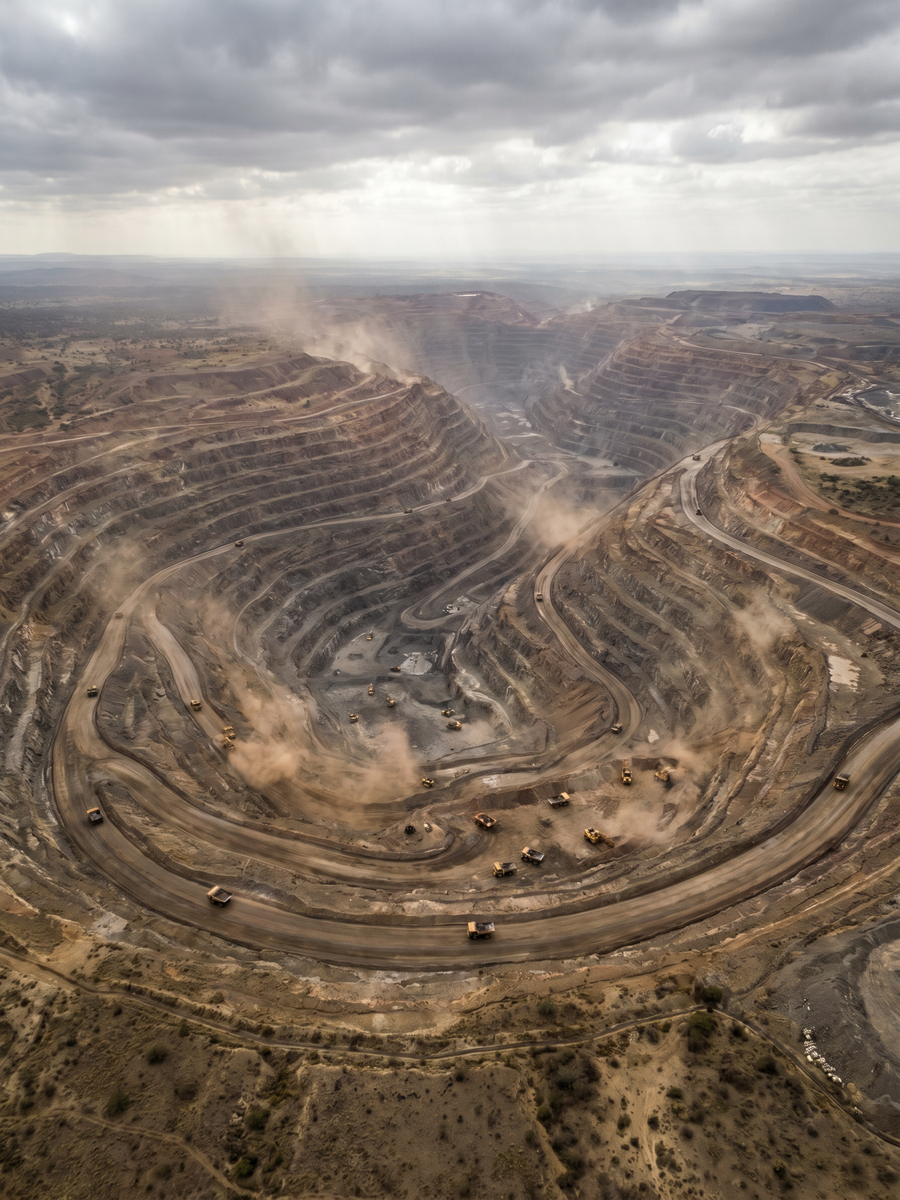
Quartz is the second most abundant mineral in the earth's crust, so any operation that cuts, crushes, drills, or moves rock or sand generates respirable crystalline silica. Mining (hard rock, sand, iron ore, coal overburden), construction (concrete sawing, tuckpointing, demolition), and manufacturing (engineered stone countertop fabrication, foundry work) are the highest-exposure industries.
Cristobalite shows up in operations involving sustained high heat. Ceramic and refractory manufacturing, volcanic ash handling, and calcined diatomaceous earth processing all produce cristobalite. Because cristobalite carries the same Group 1 classification as quartz, these operations require the same analytical vigilance.
Amorphous silica dominates in food-grade applications (anti-caking agents), filtration (diatomaceous earth before calcining), and certain manufacturing processes such as silica fume in concrete admixtures. The hazard profile is lower, but any operation that heats amorphous silica above the cristobalite conversion threshold must treat the output as crystalline. For a broader look at silica dust exposure risks, regulatory limits, and worker protection strategies, the principles here apply across all of these settings.
How Analytical Methods Distinguish Crystalline from Amorphous Silica
Because the hazard lives in the crystal structure, the analytical method must specifically identify that structure. Gravimetric analysis alone tells you the total mass of dust on a filter. It says nothing about whether the silica is crystalline or amorphous.
XRD and IR: The Structure-Specific Methods
NIOSH Method 7500 uses X-ray diffraction (XRD) to identify crystalline phases by the way the lattice scatters X-rays. Each polymorph (quartz, cristobalite, tridymite) produces a unique diffraction pattern, so XRD can quantify each one independently, even when mixed with other minerals. This makes 7500 the preferred method when the dust matrix is complex.
NIOSH Method 7602 uses infrared spectrophotometry (IR), which identifies crystalline silica by its characteristic absorption bands. IR works well when amorphous silica interference is minimal, but it can overestimate crystalline content in mixed-dust samples. Choosing between the two methods depends on the dust matrix at your operation.
Both methods require that the sample be collected on a personal breathing-zone sampler with a respirable cyclone, not from a bulk grab sample or a general-area monitor. A federally funded research study that deployed APT dust sensors, conducted by NIOSH researchers at a Wisconsin sand mine, demonstrated how real-time area sensors can complement these laboratory methods by identifying when and where respirable dust concentrations spike. That data guides where to deploy personal samplers more effectively.
Why Area Averages and Bulk Dust Readings Point You at the Wrong Problem
Current OSHA standards set the permissible exposure limit (PEL) for respirable crystalline silica at 50 µg/m³ as an 8-hour time-weighted average, with an action level of 25 µg/m³. MSHA's 2024 silica rule aligns to the same PEL and action level for metal/nonmetal mines, with the coal portion of the rule stayed pending further proceedings. These limits apply to what a worker actually breathes, measured at the personal breathing zone.
Area monitors and bulk dust readings measure something different. They capture average concentrations at a fixed location, not the air entering a specific worker's respiratory system. The gap between the two can be enormous, and it runs in both directions.
When the Dustiest Area Is Not Where the Overexposed Workers Are
At an iron-ore processing operation, the dustiest area reading came from a primary crusher running at 10.7 times the action level and over the PEL 89 percent of the time. On paper, that location looked like the obvious priority. But crusher operators sat in enclosed, filtered cabs, and their personal breathing-zone exposures reflected the cab environment, not the ambient dust outside.
The actual overexposures clustered in a building that read just under the limit as an area average. Workers in that space lacked the same engineering controls, and their personal samples told a completely different story from the area monitor mounted on the wall. This outcome is a textbook example of why worker exposure monitoring at the personal breathing zone produces fundamentally different data than area or bulk readings.
Area monitors still have value. They help characterize source emissions and validate engineering controls. They can also trigger real-time alerts when conditions change. The problem arises when teams use area data as a proxy for personal exposure. A building that reads "compliant" as an area average can still contain workers who exceed the PEL, and a location that reads alarmingly high may pose little risk to workers inside enclosed cabs. The distinction matters for every decision downstream: where to invest in controls, who needs respiratory protection, and which sampling strategies to deploy next.
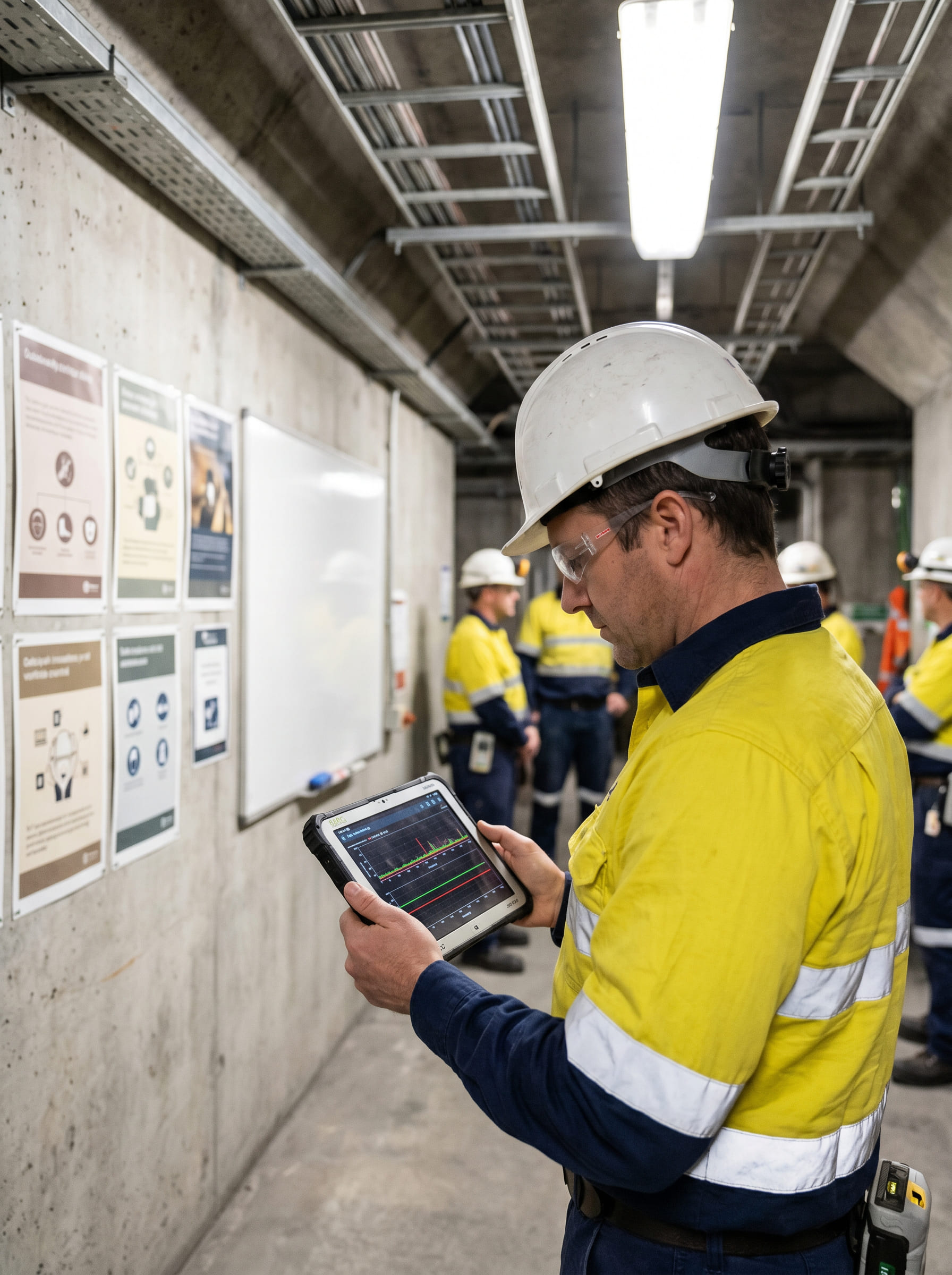
Real-time sensor networks, paired with periodic personal sampling and structure-specific laboratory analysis, fill the gap that neither method covers alone. Sensor-driven platforms identify the when and where of dust events in real time, while personal cyclone samples with XRD or IR analysis confirm exactly how much respirable crystalline silica a worker inhaled over the shift.
Frequently Asked Questions
Q: How often should we run personal respirable crystalline silica sampling in an ongoing program?
A: Set a baseline for each role and task, then repeat sampling when processes, materials, controls, or staffing change, or when sensor trends indicate new dust patterns. Many teams also schedule periodic verification sampling to confirm controls are still performing as expected.
Q: What should we do if results come back near the action level but not over the limit?
A: Treat near-threshold results as an early warning and prioritize reducing variability, not just average exposure. Tighten housekeeping and work practices, verify ventilation performance, and use targeted follow-up sampling to ensure short-term spikes are not being missed.
Q: Which job roles are most likely to be overlooked in silica risk assessments?
A: Support and transient roles often get missed, such as maintenance crews, mobile equipment operators who leave cabs, and contractors performing short-duration tasks. Map exposure by task and movement patterns, not just by department or fixed location.
Q: What engineering controls typically give the fastest reduction in respirable silica exposure?
A: The quickest wins usually come from controlling dust at the source, for example wet methods and local exhaust ventilation. Effective enclosure with negative pressure also helps where feasible. Confirm impact with post-control sampling because improvements can vary widely by task and tool.
Q: When should a site involve an occupational hygienist versus handling the program internally?
A: Bring in an occupational hygienist when you are designing a sampling strategy, interpreting mixed or variable results, or documenting compliance for high-risk operations. Internal teams can often manage routine sampling and control checks once the framework is established.
Q: How do we evaluate and maintain the protection of enclosed cabs and control rooms over time?
A: Build a maintenance and verification plan that includes filter selection, replacement intervals, and cab integrity checks. Include pressure or airflow verification, then correlate these checks with periodic exposure data. Small issues like door seals, filter loading, and open-door behavior can erode protection quickly.
Q: What training topics most improve worker compliance and exposure reduction for silica tasks?
A: Focus training on task-specific behaviors: correct tool setup, control use, and recognizing conditions that increase dust (such as dry sweeping or bypassing water feeds). Reinforce with simple checklists and supervisor coaching so controls are used consistently in the field.
Build Your Silica Program Around What Workers Actually Breathe
The hazard from silica is decided by two things: crystal structure and particle size. Amorphous silica and crystalline silica are chemically identical but toxicologically distinct. Bulk dust mass and area averages describe the environment, not the worker. Any program that conflates these distinctions, treating all SiO₂ the same or substituting area readings for personal exposure data, will misallocate resources and leave the truly overexposed workers unprotected.
Effective silica management pairs real-time dust monitoring with personal breathing-zone sampling and structure-specific laboratory analysis. Each layer answers a different question, and none of them replaces the others.
If you want to see how continuous dust data integrates with personal sampling to identify who is actually overexposed and why, book a personalized demo with Applied Particle Technology.
Take a tour of APT's dust management platform

Vulcan Materials Company is the nation’s largest producer of construction aggregates.

Project partner
Brent Leclerc | Environmental Manager
Problems solved
Unjustified community dust complaints & lawsuits
Difficulty complying with opacity regulations and risk of NOVs
Solution
Real-time dust monitoring
Dust maps proving no community impact, preventing fines & lawsuits
Real-time opacity monitoring, high degree of compliance


.webp)
Better decisions start with real-time insight
APT helps industrial teams move faster, act smarter, and stay compliant—because when you can see the problem clearly, you can solve it confidently.
