A single shift of uncontrolled silica exposure can set the stage for irreversible lung disease. Yet many operations still treat their silica plan as a binder collecting dust on a shelf, disconnected from the daily decisions that actually determine whether workers breathe clean air or hazardous particles.
Respirable crystalline silica ranks among the most dangerous airborne hazards in mining, construction, and aggregate production. A written exposure control plan does more than check a regulatory box. It connects hazard identification, engineering controls, monitoring data, and worker training into a living system that reduces risk in real time. This guide breaks down what a silica plan must include, how OSHA and MSHA requirements differ, and how to build one that actually protects people.
What a Silica Plan Is and Who Needs One
A silica exposure control plan is a written document that identifies every task generating respirable crystalline silica, assigns specific controls to each task, and lays out responsibilities for monitoring, training, and recordkeeping. Think of it as the operational blueprint that translates regulatory requirements into day-to-day actions on the ground.
Operations That Require Written Silica Controls
Any employer whose workers could be exposed to airborne silica above the action level needs a plan. In practice, that covers a wide range of industries and tasks.
Mining operations (surface and underground) handling rock, sand, or ore containing quartz
Construction crews cutting, grinding, or drilling concrete, masonry, and stone
Aggregate and ready-mix producers running crushing, screening, and bagging operations
Foundries, glass manufacturers, and hydraulic fracturing sites
If you're unsure whether your operation qualifies, the simplest test is this: does any task disturb material containing crystalline silica? If yes, you likely need a written plan. Skipping it doesn't just invite citations. It exposes workers to a hazard that causes silicosis, lung cancer, and other serious respiratory diseases with no cure.
Silica Exposure Risks That Drive Regulatory Action
Silica isn't a hazard you can see, smell, or taste at dangerous concentrations. Respirable particles smaller than 10 microns bypass the body's natural defenses, settle deep in lung tissue, and trigger chronic inflammation. Over time, this leads to scarring (silicosis), increased susceptibility to tuberculosis, and elevated cancer risk.
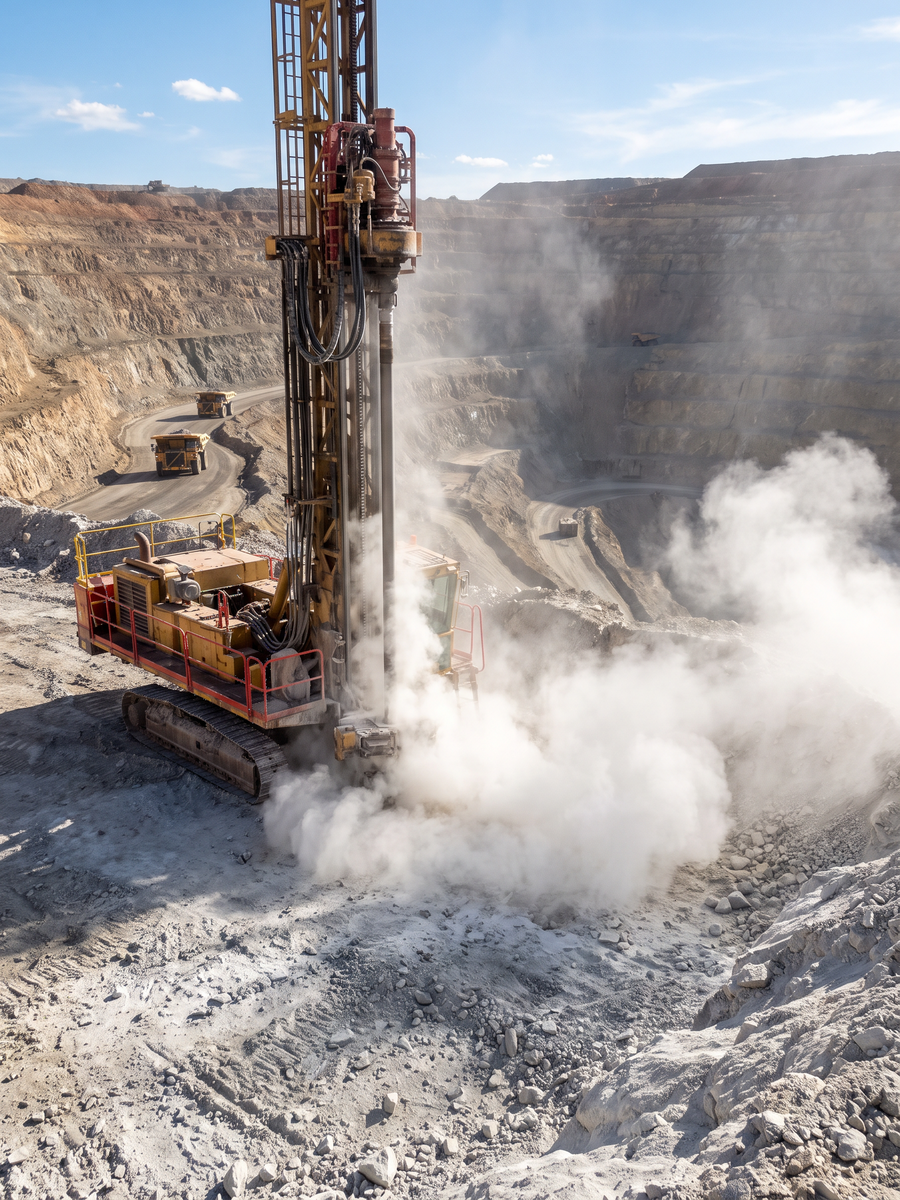
What makes silica particularly insidious is the lag between exposure and symptoms. Workers may feel fine for years before irreversible damage surfaces. That delay creates a false sense of security on sites where dust "doesn't look that bad." Even short-term exposure during a single shift can cause measurable harm when concentrations spike during high-risk tasks like dry cutting or drilling without water suppression.
This health reality is exactly why both OSHA and MSHA have tightened standards. Regulators aren't issuing stricter limits arbitrarily. They're responding to decades of epidemiological evidence showing that previous permissible exposure limits failed to prevent disease.
OSHA vs. MSHA Silica Regulations: Key Compliance Differences
Both agencies regulate silica exposure, but they govern different industries, set slightly different requirements, and operate on different timelines. Confusing the two is a common and costly mistake, especially for companies that operate across both jurisdictions.
Permissible Exposure Limits and Action Levels
OSHA's respirable crystalline silica standard (29 CFR 1926.1153 for construction, 29 CFR 1910.1053 for general industry) sets a PEL of 50 µg/m³ as an 8-hour time-weighted average, with an action level of 25 µg/m³. According to MSHA's 2024 final rule, the agency now mandates the same 50 µg/m³ PEL and 25 µg/m³ action level for respirable crystalline silica in all U.S. mines, aligning mining standards more closely with OSHA.
- Requirement: PEL (8-hr TWA) | OSHA (Construction / General Industry): 50 µg/m³ | MSHA (Mining): 50 µg/m³
- Requirement: Action Level | OSHA (Construction / General Industry): 25 µg/m³ | MSHA (Mining): 25 µg/m³
- Requirement: Written Plan Required | OSHA (Construction / General Industry): Yes, when exposures exceed action level | MSHA (Mining): Yes, as part of compliance obligations
- Requirement: Table 1 Option | OSHA (Construction / General Industry): Available in construction | MSHA (Mining): Not applicable
- Requirement: Medical Surveillance | OSHA (Construction / General Industry): Required above action level for 30+ days/year | MSHA (Mining): Required per final rule provisions
- Requirement: Full Compliance Deadline | OSHA (Construction / General Industry): Already in effect | MSHA (Mining): April 2025 (coal) / April 2026 (metal/non-metal)
Table 1 Compliance vs. Air Monitoring
OSHA gives construction employers a unique option: follow the prescribed controls in Table 1 for specific tasks (like using a saw with integrated water delivery) and skip exposure monitoring entirely. This works well for straightforward, repetitive tasks where the controls are well-established.
However, Table 1 has real limitations. It doesn't cover every task, it assumes controls function perfectly, and it provides zero data about actual worker exposure. For complex or variable operations, and for anything under MSHA jurisdiction, air monitoring is the only defensible path. The difference between real-time and filter-based sampling approaches matters significantly here, since each method answers different compliance questions.
How to Build a Silica Exposure Control Plan Step by Step
A silica plan that actually works starts with honest assessment and ends with a cycle of continuous improvement. Here's a practical framework that satisfies both OSHA and MSHA requirements while keeping the focus on reducing real exposure.
Step 1: Inventory Every Silica-Generating Task
Walk your operation and catalog every activity that disturbs silica-containing material. Include obvious sources like crushing and drilling, but don't overlook secondary sources such as vehicle traffic on haul roads, material transfer points, and housekeeping activities like dry sweeping. Each task needs a description of the work, the materials involved, estimated duration, and the number of workers exposed.
Step 2: Assess Exposure Potential
Rank each task by its likely exposure level. Historical sampling data helps, but many operations lack sufficient records. Where gaps exist, use qualitative indicators: dust visibility, proximity to material handling, enclosed vs. open environments, and duration of exposure. This ranking drives your control priorities so you address the highest-risk tasks first.
Step 3: Assign Engineering and Administrative Controls
For each task, specify the primary control method. Engineering controls like wet methods, ventilation, and enclosed cabs take priority over administrative controls and respirators. Document exactly what control applies to each task, who maintains it, and what triggers corrective action when controls fail.
Respiratory protection fills the gaps, but it should never be the first line of defense. A plan that relies primarily on respirators signals that engineering controls need improvement.
Step 4: Define Monitoring and Documentation Procedures
Specify how and when you'll measure exposure. Include the sampling method, frequency, and who conducts the monitoring. Equally important: document how results feed back into control decisions. A monitoring program that generates data nobody acts on is a liability, not an asset.
Step 5: Train Workers and Assign a Competent Person
Every worker with potential silica exposure needs training on the hazards, the specific controls for their tasks, and how to report problems. Designate a competent person responsible for implementing and updating the plan. This isn't a ceremonial role. The competent person must have the authority and knowledge to stop work when controls fail.
Step 6: Schedule Reviews and Updates
A silica plan isn't a static document. Review it at least annually, and update it whenever processes change, monitoring reveals unexpected exposure levels, or new regulatory requirements take effect. MSHA's phased compliance deadlines make this particularly urgent for mining operations right now.
Where Real-Time Dust Monitoring Strengthens Your Silica Plan
Traditional filter-based sampling tells you what happened over an 8-hour shift, but it tells you nothing about when or why exposure spiked. That's a significant blind spot. If a 15-minute task generates 80% of a worker's daily exposure, you need to know about it in real time so you can intervene immediately rather than discovering the problem weeks later when lab results arrive.
Continuous Data Closes the Gap Between Sampling and Action
Real-time dust monitors generate continuous concentration data, often at intervals of 15 to 30 seconds. This granularity lets you correlate exposure spikes with specific tasks, equipment malfunctions, or environmental conditions. Instead of guessing which activity drives overexposure, you see it happening and can act before the shift ends.
A NIOSH study validated this approach by deploying low-cost dust monitors in a Wisconsin mine. The researchers found that real-time sensors identified specific times and locations of elevated dust levels that traditional sampling would have averaged away into a single 8-hour number. That level of detail transforms a silica plan from a reactive document into a proactive control system.
Applied Particle Technology's monitoring platform takes this concept further by combining real-time sensor data with cloud-based analytics. The system delivers instant alerts when dust concentrations approach action levels, giving safety teams the information they need to intervene before exposures become compliance violations. For mining operations facing MSHA's new silica standard, this kind of continuous monitoring creates the defensible documentation that inspectors expect to see.
Silica Plan Checklist for Safety Managers
Use this checklist to audit your existing plan or build a new one from scratch. Each item maps directly to OSHA and MSHA requirements.
Task inventory: Every silica-generating task documented with materials, duration, and worker count
Exposure assessments: Baseline sampling data or qualitative risk ranking for each task
Engineering controls: Specific control assigned to each task with maintenance schedule
Respiratory protection: Respirator selection, fit testing records, and conditions for mandatory use
Monitoring protocol: Sampling method, frequency, and trigger criteria for additional monitoring
Competent person: Named individual with defined authority and responsibilities
Worker training: Initial and refresher training records with content documentation
Medical surveillance: Enrollment criteria, provider information, and follow-up procedures
Recordkeeping: Monitoring results, inspection logs, and corrective action documentation
Review schedule: Annual review date and triggers for interim updates
Industrial hygienists working with CPWR's Silica-Safe template have noted that a standardized, regulation-mirrored framework speeds audits and facilitates annual plan review and updates with new exposure data. Adapting a proven template to your specific operation is far more efficient than starting from a blank page.
Frequently Asked Questions
What should a competent person do during daily operations to keep a silica plan effective?
They should verify that required controls are in place before work starts, observe high-risk tasks for control failures, and document corrective actions immediately. They also serve as the point person for worker reports, equipment issues, and stop-work decisions when exposure controls are not functioning.
How can companies coordinate safety and production goals without undermining silica controls?
Build silica controls into standard operating procedures so they are treated as part of the job, not an optional add-on. Align production metrics with control uptime and preventive maintenance so crews are rewarded for running dust controls correctly, not for bypassing them to save time.
What maintenance practices help engineering controls stay reliable over time?
Use pre-shift inspections, scheduled preventive maintenance, and clear ownership for each control system, including water delivery, ventilation components, and cab seals. Track recurring failures and stock critical spare parts so controls can be restored quickly when issues arise.
How should you handle contractors and visitors under a silica plan?
Include them in site rules by requiring task-specific briefings, defined work zones, and verification that their equipment uses equivalent dust controls. Set expectations in contracts and onboarding so responsibility for controls, PPE, and reporting is clear before work begins.
What records are most helpful during an inspection or internal audit beyond exposure measurements?
Inspectors often look for evidence that controls are actively managed, such as maintenance logs, corrective action reports, training sign-offs, and job hazard analyses. Keeping these organized by task and date makes it easier to demonstrate that your plan is being implemented consistently.
How do you decide whether to use in-house resources or a third-party industrial hygienist?
If your operation has variable tasks, multiple sites, or limited internal expertise, a third party can help validate methods and strengthen defensibility. In-house programs can work well when you have trained staff, stable processes, and a clear process for periodic independent review.
What change management steps should trigger an immediate silica plan update?
Update the plan when you introduce new materials, tools, or processes, modify ventilation or water systems, change traffic patterns, or alter housekeeping methods. Treat near-misses, recurring control failures, and worker complaints as triggers for a rapid review, not just an annual update.
Turn Your Silica Plan Into a Working Safety System
A well-built silica plan does more than satisfy regulators. It gives your team a clear, repeatable process for identifying hazards, controlling exposure, and proving that controls work. The difference between a plan that protects workers and one that just fills a binder comes down to data quality and follow-through.
With MSHA's tighter limits already taking effect and enforcement ramping up, the cost of inaction far exceeds the investment in proper controls and monitoring. Operations that build their silica plan around continuous, real-time data catch problems faster, document compliance more thoroughly, and ultimately create safer workplaces.
Applied Particle Technology helps mining and industrial operations close the gap between written plans and actual exposure control. Our real-time dust monitoring platform delivers the continuous data, automated alerts, and defensible documentation that modern silica compliance demands. Explore APT's silica monitoring solutions to see how real-time data can strengthen your silica plan and protect your workforce.
Take a tour of APT's dust management platform

Vulcan Materials Company is the nation’s largest producer of construction aggregates.

Project partner
Brent Leclerc | Environmental Manager
Problems solved
Unjustified community dust complaints & lawsuits
Difficulty complying with opacity regulations and risk of NOVs
Solution
Real-time dust monitoring
Dust maps proving no community impact, preventing fines & lawsuits
Real-time opacity monitoring, high degree of compliance





Better decisions start with real-time insight
APT helps industrial teams move faster, act smarter, and stay compliant—because when you can see the problem clearly, you can solve it confidently.
