A single dust event can shut down a production line, trigger a regulatory citation, or send a worker to the hospital. Yet most industrial facilities still rely on periodic grab samples and lab turnaround times that take days or weeks to deliver answers. Industrial dust sensors change that equation by providing continuous, real-time particulate data that operations teams can act on immediately.
This guide breaks down how these sensors work, which measurement methods fit which applications, and how to choose the right device for your facility. Whether you manage a mine site, a cement plant, or a food processing operation, the goal is the same: protect workers, stay compliant, and make smarter decisions about dust control spending.
What Are Industrial Dust Sensors and What Do They Measure?
An industrial dust sensor is a device that detects and quantifies airborne particulate matter in workplace or environmental settings. Unlike consumer-grade air quality monitors designed for homes and offices, industrial sensors are built to withstand harsh conditions: extreme temperatures, high humidity, vibration, and heavy dust loading that would overwhelm a standard device.
These sensors measure the concentration of airborne particles, typically reported in micrograms per cubic meter (µg/m³). The particles they track fall into standardized size fractions, each relevant to different health and regulatory concerns. Understanding those fractions is foundational to choosing the right sensor for your operation.
PM1, PM2.5, PM10, and TSP: Which Fractions Matter
PM10 refers to particles 10 micrometers or smaller. These are inhalable and can reach the upper respiratory tract. Most fugitive dust regulations and opacity standards target this fraction because it represents the bulk of visible dust from crushers, haul roads, and material handling.
PM2.5 captures fine particles 2.5 micrometers and smaller. These penetrate deep into the lungs and are associated with serious cardiovascular and respiratory conditions. Ambient air quality standards from the EPA focus heavily on PM2.5 because of its documented health impacts.
PM1 tracks ultrafine particles below 1 micrometer. These reach the alveoli and can enter the bloodstream. PM1 monitoring matters most in operations involving combustion, welding, or processes that generate submicron fumes.
TSP (Total Suspended Particulates) measures the full range of airborne particles regardless of size. TSP is less commonly used in modern health-based regulations but remains relevant for nuisance dust assessments and some legacy permit requirements.
The fraction you need to monitor depends on your regulatory context and health risks. A mining operation worried about respirable dust monitoring for OSHA and MSHA compliance will prioritize PM4 (the respirable fraction) and crystalline silica. A facility managing community complaints near a residential area will focus on PM10 and PM2.5 at the fenceline.
How Particulate Monitoring Works in Industrial Settings
All dust sensors share a core objective: count or weigh particles in a known volume of air. How they accomplish that varies significantly, and the method you choose directly affects accuracy, maintenance burden, and suitability for your environment.
Laser Scattering Sensors
Laser scattering (also called optical particle counting) is the most common technology in modern low-cost and mid-range industrial dust sensors. The sensor draws air through a chamber where particles pass through a focused laser beam. Each particle scatters light, and a photodetector measures the intensity and pattern of that scatter to estimate both particle size and concentration.
The advantage is speed. Laser scattering sensors deliver readings every few seconds, making them ideal for real-time monitoring and alert-driven workflows. The tradeoff is that they estimate mass concentration based on assumptions about particle density, shape, and refractive index. That means they require calibration against gravimetric reference samples for your specific dust type to achieve reliable accuracy.
A study by the National Institute for Occupational Safety and Health (NIOSH) validated this approach in a Wisconsin sand mine, where low-cost dust monitors deployed alongside gravimetric samplers demonstrated that real-time optical sensors can meaningfully complement traditional methods when properly calibrated.
Triboelectric Sensors
Triboelectric sensors detect the electrical charge generated when particles collide with or pass near a probe inserted into an air duct or stack. They excel at detecting changes in dust concentration rather than providing precise mass measurements. This makes them well-suited for filter leak detection, bag-house monitoring, and process upset alarms where relative change matters more than absolute numbers.
They are durable and low-maintenance, which counts for a lot in aggressive duct environments. However, they struggle with very fine particles and cannot differentiate between particle sizes.
Transmission (Opacity) and Extractive Methods
Transmission-based sensors measure how much light is absorbed or scattered as a beam passes across a duct or stack. This is the basis for opacity monitoring, which many EPA and state air permits require for stack emissions compliance. Facilities managing dust opacity monitoring obligations typically rely on continuous opacity monitoring systems (COMS) or continuous particulate monitoring systems (CPMS).
Extractive methods physically pull a sample of air from a duct and analyze it externally. They provide highly accurate mass concentration data but involve more complex plumbing and maintenance. Extractive systems tend to appear in regulatory compliance applications where precision is non-negotiable.
No single method dominates every scenario. Laser scattering wins on speed and cost for ambient and personal monitoring. Triboelectric sensors own the duct leak-detection space. Opacity and extractive systems handle regulated stack emissions. The right choice depends on where you are measuring and why.
Choosing the Right Industrial Dust Sensor for Your Facility
Sensor selection should start with your monitoring objective, not a product catalog. The criteria below will help you narrow the field based on real-world constraints rather than spec-sheet comparisons.
Deployment Type: Ambient, Duct, Stack, or Personal
Ambient sensors monitor the general air quality in a work area, along a fenceline, or across a facility footprint. They need weatherproof enclosures, wireless connectivity, and enough spatial coverage to capture dust migration patterns. A network of ambient sensors provides the data foundation for a comprehensive dust monitoring system that maps concentrations in real time.
Duct-mounted sensors sit inside process ventilation systems to verify that dust control equipment is functioning. Triboelectric and light-scattering probes dominate this space. The environment is harsh: high airflow velocities, conductive dust, moisture, and vibration all affect sensor longevity.
Stack sensors serve emissions compliance. They must meet regulatory method requirements (EPA Methods 9, 22, or Continuous Emissions Monitoring standards) and often require third-party certification.
Personal exposure monitors are worn by individual workers to track the dust they actually breathe. These devices must be lightweight, battery-powered, and capable of logging data across an entire shift. Operations focused on worker dust exposure monitoring use personal sensors to identify which tasks and locations create the highest risk.
Environmental and Operational Constraints
Your environment dictates which sensors will survive. Consider temperature range first. Standard optical sensors fail below freezing without heated enclosures, and extreme heat degrades electronics and laser diodes. A cold-weather mining deployment in British Columbia, for example, required custom-engineered heating components and solar-backup power systems to maintain sensor operation through extended periods of sub-zero temperatures and limited sunlight.
Humidity and condensation cause false readings in optical sensors. Fog correction algorithms help, but sites with persistent high humidity may need sensors specifically designed for those conditions. Vibration from crushers, conveyors, and blasting can physically damage sensitive components, so look for ruggedized housings with vibration isolation.
Connectivity matters too. Remote mine sites and sprawling quarries often lack wired network infrastructure. Cellular and Wi-Fi connectivity options with latencies of just a few seconds allow sensor data to reach dashboards in near-real-time, even in challenging terrain.
Calibration, Maintenance, and Data Integrity
Every sensor drifts over time. The question is how much effort calibration requires and how often you need to do it. Laser-scattering sensors typically need periodic calibration against gravimetric reference samples specific to your dust type. Triboelectric sensors may need recalibration when process conditions change significantly.
Maintenance burden varies widely. Some sensors require quarterly lens cleaning and annual factory recalibration. Others are designed as managed solutions where the vendor handles hardware upkeep, data validation, and ongoing calibration so your team can focus on acting on the data rather than babysitting equipment.
Be honest about your team's bandwidth. A sensor that requires weekly attention but sits neglected for months produces unreliable data. That is worse than no sensor at all, because it creates false confidence.
Industrial Air Quality Use Cases Across Key Sectors
Dust monitoring needs vary dramatically by industry. Here is how sensor deployments look in practice across several high-risk sectors.
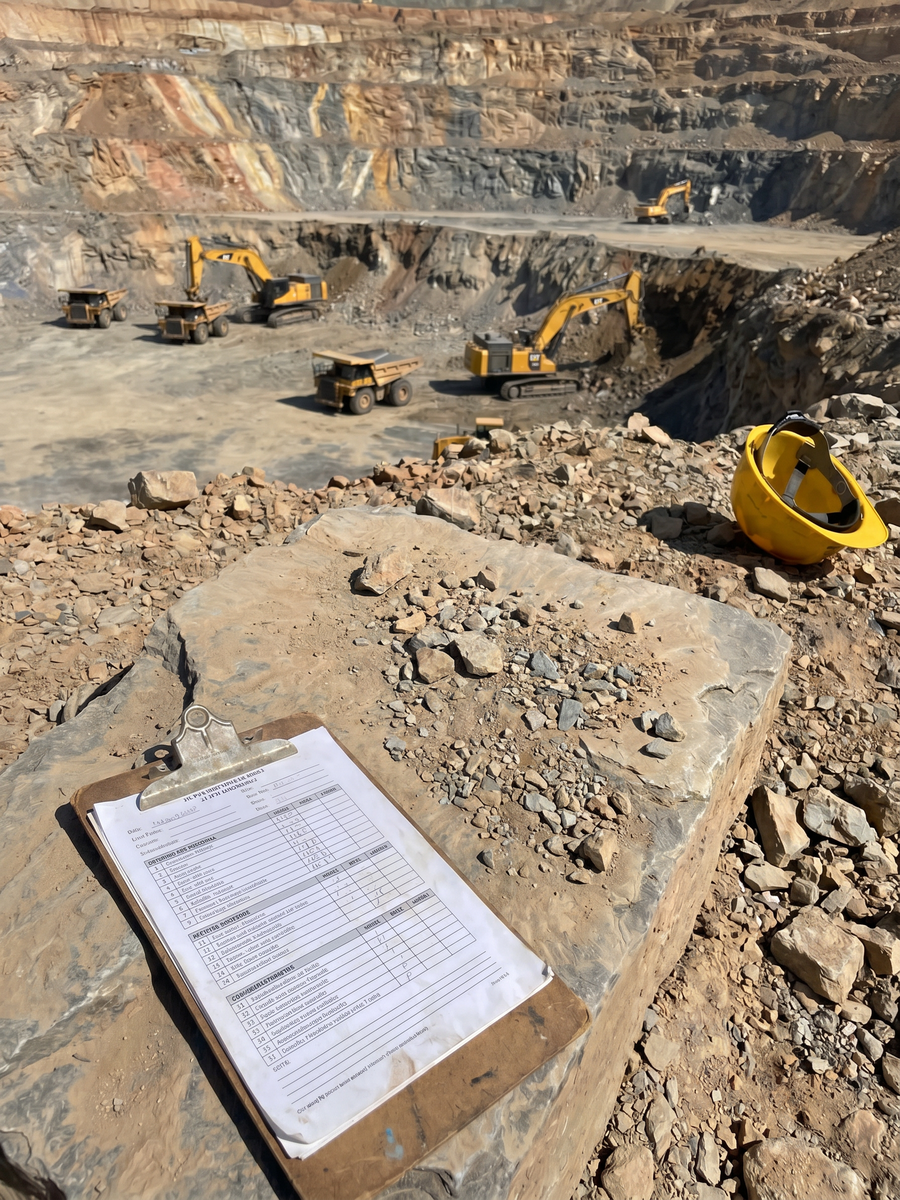
Mining and quarrying face the broadest range of dust challenges. Haul roads generate PM10 plumes, crushing and screening operations produce respirable silica, and blasting creates episodic spikes that travel downwind to communities. Networks of ambient fenceline sensors combined with personal exposure monitors give operations teams the spatial and individual-level data they need.
Cement and concrete manufacturing involves continuous handling of calcium silicate dust. Kiln operations, clinker grinding, and material transfer points all generate high dust loads. Duct-mounted sensors on baghouse outlets catch filter failures before they become visible emissions violations.
Metals processing produces metal fumes and fine particulate from smelting, grinding, and welding. PM1 and PM2.5 monitoring is especially relevant here because metal fumes tend to be submicron particles that pose the greatest inhalation risk.
Food processing and woodworking create combustible dust hazards alongside health concerns. Grain elevators, flour mills, and sawmills need sensors that double as explosion risk monitors. Rapid detection of dust accumulation in these environments is a safety-critical function, not just a compliance checkbox.
Across all these sectors, the trend is clear: periodic sampling alone cannot keep pace with the variability of real operations. A real-time monitoring approach that uses continuous dust data to pinpoint exposure sources and verify controls provides a fundamentally different level of operational insight.
Best Practices for Effective Particulate Monitoring Programs
Installing sensors is only the beginning. The facilities that get the most value from their dust monitoring investments follow a structured program that turns raw data into action.
Baseline Measurement and Alarm Thresholds
Start by establishing baseline dust levels during normal operations. Run sensors for at least two to four weeks before setting alarm thresholds. Baseline data reveals your facility's natural variability, which prevents nuisance alarms that erode trust in the system.
Set tiered alert levels. A first-tier notification might prompt a supervisor to check conditions. A second-tier alarm triggers immediate corrective action like dispatching water trucks or shutting down a process. The U.S. EPA's Air Emissions Monitoring Knowledge Base provides updated guidance on monitoring methods and QA/QC procedures that can help calibrate your program against federal standards.
Data Integration and Corrective Action Workflows
Sensor data sitting in a silo accomplishes nothing. Connect your dust monitoring platform to operational workflows so that alerts trigger specific, documented responses. The best programs tie sensor readings to SCADA systems, plant control dashboards, or at minimum automated text and email notifications that reach the right people within seconds.
Corrective actions should be predefined. When a threshold is breached at a specific location, the response plan should already specify who acts, what they do, and how they document it. This turns dust monitoring from passive data collection into an active risk management tool.
Trend Review and Continuous Improvement
Review weekly and monthly dust trends, not just individual alarm events. Trend analysis reveals patterns that point-in-time readings miss: seasonal variations, shift-specific behaviors, equipment degradation, and the true effectiveness of control measures over time.
The air quality monitoring market reflects this shift toward continuous, data-driven management. MarketsandMarkets projects that the global air quality monitoring systems market will reach USD 13.86 billion by 2031, driven by tightening regulations and growing adoption of real-time sensor networks in industrial applications.
Applied Particle Technology (APT) exemplifies this integrated approach by combining real-time dust sensors with cloud-based software that transforms raw readings into actionable insights. Their platform generates continuous dust heat maps, configurable alerts, and historical trend reports that EHS teams use to defend against complaints, optimize suppression spending, and demonstrate compliance. Facilities using this kind of platform have reported up to $500K in avoided capital projects and 75% fewer sampling campaigns compared to traditional grab-sample programs.
Frequently Asked Questions
Q: How do industrial dust sensors perform compared to filter-based gravimetric sampling?
A: Gravimetric sampling is still the reference for defensible mass measurements, but it is slow and labor-intensive. Dust sensors excel at showing minute-to-minute variability and pinpointing when and where spikes occur, which helps you target controls and decide when confirmatory lab sampling is actually needed.
Q: What certifications or standards should I look for when buying an industrial dust sensor?
A: Start with ingress protection and electrical safety ratings appropriate for your environment, then look for documented QA/QC procedures, traceable calibration practices, and published performance testing. If you operate in hazardous locations, verify the unit is certified for your area classification (for example, ATEX or IECEx) before deployment.
Q: How do I decide where to place sensors for the most useful data?
A: Use a simple site map to identify likely sources, worker zones, air intakes, and downwind boundaries, then place sensors to capture both near-source conditions and background levels. Pair that layout with prevailing wind and ventilation patterns so the network can distinguish internal emissions from off-site contributions.
Q: What is the best way to handle false positives from fog, steam, or non-dust aerosols?
A: Combine operational context with sensor signals by tagging events like washdowns, steam releases, or weather conditions, then filter alerts based on those known interferences. Many teams also validate thresholds with short-term side-by-side checks using a reference method during typical high-humidity periods.
Q: How should I interpret sensor data when the dust is oily, sticky, or chemically reactive?
A: Challenging dust types can foul inlets, coat optics, or behave differently than dry mineral dust, which can shift readings and increase maintenance needs. In these environments, prioritize sensors with robust sampling paths, easy-to-service components, and a maintenance plan that reflects the material properties, not generic schedules.
Q: Can dust sensor data be used as evidence during regulatory inspections or community complaints?
A: It can be highly useful for demonstrating active management, rapid response, and trend documentation, especially when paired with clear QA/QC records and incident logs. For formal compliance determinations, regulators often require specific reference methods, so position sensor data as supporting evidence and an early warning system.
Q: What cybersecurity and data governance practices matter for cloud-connected dust monitoring?
A: Require encryption in transit and at rest, role-based access control, audit logs, and clear data retention policies so records remain trustworthy over time. Also confirm who owns the data, how exports work, and what happens to historical records if you switch vendors.
Turning Dust Data Into Safer, Smarter Operations
Industrial dust sensors have moved well beyond simple detection devices. The right sensor network, paired with software that delivers actionable intelligence, transforms how facilities manage health risks, regulatory obligations, and operational costs. The key is matching your sensor technology to your specific environment, connecting data to real corrective actions, and committing to continuous improvement rather than periodic snapshots.
If your operation still relies on quarterly grab samples and lab turnarounds that arrive weeks later, the gap between what you know and what is actually happening on your site is wider than you think. Applied Particle Technology helps environmental, safety, and operations teams close that gap with managed sensor networks and the LEAP™ dust management platform. Book a personalized demo to see how real-time dust monitoring can reduce your exposure risks and compliance costs.
Take a tour of APT's dust management platform

Vulcan Materials Company is the nation’s largest producer of construction aggregates.

Project partner
Brent Leclerc | Environmental Manager
Problems solved
Unjustified community dust complaints & lawsuits
Difficulty complying with opacity regulations and risk of NOVs
Solution
Real-time dust monitoring
Dust maps proving no community impact, preventing fines & lawsuits
Real-time opacity monitoring, high degree of compliance





Better decisions start with real-time insight
APT helps industrial teams move faster, act smarter, and stay compliant—because when you can see the problem clearly, you can solve it confidently.
