How long can you live with silicosis depends on answers that most patients and families never receive in a straight line. Doctors hedge because the disease varies enormously by type, by stage at diagnosis, and by whether the lungs keep absorbing silica after the first scan. A worker diagnosed with early chronic silicosis at age 50 may live into his seventies. A countertop fabricator diagnosed with acute silicosis at 30 may not see 35.
This article lays out what the survival data actually say, what drives the differences, and why the single most powerful variable in every prognosis equation is the one that happens before diagnosis: preventing the exposure that starts the clock.
What Silicosis Is and Why Prognosis Varies So Widely
Silicosis is a fibrotic lung disease caused by inhaling respirable crystalline silica, particles roughly 4 micrometers and smaller that penetrate deep into the gas-exchange regions of the lungs. Once lodged in alveolar tissue, these particles trigger an inflammatory cascade that deposits collagen in nodular patterns. That collagen does not resorb. The scarring is permanent, and no drug or procedure reverses established silicosis.
The International Agency for Research on Cancer classifies crystalline silica (quartz and cristobalite) as a Group 1 carcinogen in humans, placing it alongside asbestos and benzene. Silicosis also raises the risk of tuberculosis, chronic obstructive pulmonary disease, and progressive massive fibrosis, each of which compounds the survival outlook.
Why One Diagnosis Can Mean Very Different Timelines
Prognosis swings so widely because silicosis is not one disease. It is three distinct clinical patterns, each driven by a different dose-time relationship between the worker and the dust. A miner who breathes moderate concentrations over 25 years develops a different pathology than a stonecutter who inhales extreme concentrations over three years. The lung's response, and therefore the survival trajectory, reflects that difference.
Silicosis Life Expectancy by Type: Chronic, Accelerated, and Acute
The three forms of silicosis differ in latency, progression speed, and expected survival. Understanding which type a patient has is the first step in interpreting any prognosis figure.
Chronic Silicosis
Chronic silicosis develops after 10 to 30 years of exposure to moderate silica concentrations. It is the most common form and typically the slowest to progress. Many workers remain asymptomatic for years after nodules first appear on imaging, which is why routine surveillance chest X-rays catch cases that would otherwise go undetected until lung function drops noticeably.
Because fibrosis accumulates gradually, workers diagnosed early and removed from further exposure can live for decades. However, progression does not always stop when exposure stops. Some patients experience continued fibrotic remodeling driven by silica particles already deposited in the lungs, particularly if dust burdens are high.
Accelerated Silicosis
Accelerated silicosis appears 5 to 10 years after first exposure and involves higher silica concentrations. The clinical and radiographic picture resembles chronic silicosis compressed into a shorter timeline, with faster nodule coalescence and earlier onset of respiratory impairment. This form has become increasingly visible in younger workers, especially those cutting, grinding, or polishing high-silica engineered stone products.
Acute Silicosis (Silicoproteinosis)
Acute silicosis is the rarest and most lethal form. It results from massive silica exposure over weeks to months. Rather than forming nodules, the lungs fill with proteinaceous fluid similar to pulmonary alveolar proteinosis. Symptoms escalate rapidly: dyspnea, weight loss, fatigue, and hypoxemia. Median survival after diagnosis is often measured in months, not years. Whole-lung lavage can temporarily improve gas exchange, but the prognosis remains grim without lung transplantation.
- Form: Chronic | Typical Latency: 10 to 30 years | Exposure Intensity: Moderate | Progression: Slow, may plateau | Prognosis Outlook: Years to decades if exposure ceases
- Form: Accelerated | Typical Latency: 5 to 10 years | Exposure Intensity: High | Progression: Steady decline | Prognosis Outlook: Reduced; faster progression to PMF
- Form: Acute | Typical Latency: Weeks to months | Exposure Intensity: Extreme | Progression: Rapid | Prognosis Outlook: Weeks to months without transplant
Silicosis Prognosis by Stage: What the Evidence Shows
Stage at diagnosis is the other major axis of prognosis. A 2025 retrospective cohort study published in Frontiers in Public Health analyzed 11,809 silicosis patients in Guangdong Province, China, providing one of the largest survival datasets available. Across all stages, the study reported a median survival of 25 years from diagnosis.
When stratified by radiographic stage, the differences were stark. Stage I patients had a median survival of 27.0 years. Stage II patients had a median survival of 20 years. Stage III patients had a median survival of 11 years. Each stage reflects increasing fibrotic burden, reduced lung compliance, and greater vulnerability to complications like progressive massive fibrosis and respiratory failure.
Important Context for These Numbers
These figures come from a population with conventional silicosis, primarily workers in mining and traditional industries exposed over long periods. They do not reflect the accelerated and acute cases now appearing in engineered stone fabrication, where silica content in the raw material can exceed 90% and latency periods collapse dramatically. Applying the Guangdong median of 25 years to a 28-year-old fabricator with accelerated disease would be misleading and dangerous.
Individual outcomes also vary based on age at diagnosis, baseline lung function, smoking status, concurrent tuberculosis, and whether the patient develops progressive massive fibrosis. The Guangdong data give population-level benchmarks, not individual predictions.
What Affects Silicosis Prognosis and Survival
Continued Silica Exposure
The single most impactful modifiable factor is whether exposure continues after diagnosis. Every additional shift in a dusty environment adds to the cumulative silica burden in the lungs and accelerates fibrosis. Removing the worker from exposure does not reverse existing damage, but it can slow or halt further progression in chronic cases. This is why understanding silica dust exposure risks and worker protection strategies is so consequential long before a diagnosis ever appears on a chart.
Smoking and Comorbidities
Smoking compounds silicosis at every stage. It accelerates decline in FEV1, increases susceptibility to respiratory infections, and raises the already elevated lung cancer risk that silica exposure confers. Tuberculosis is another significant complication: silicosis impairs alveolar macrophage function, and TB co-infection worsens both mortality and quality of life.
Disease Progression to PMF
Progressive massive fibrosis, the coalescence of small nodules into large fibrotic masses, represents the most ominous development in any silicosis case. PMF restricts lung volume, compresses airways, and often triggers cor pulmonale. Once PMF is established, median survival drops significantly regardless of the original silicosis type.
The Engineered Stone Crisis and Accelerated Silicosis
The global rise of engineered stone countertops has created a new and younger population of silicosis patients. Engineered stone slabs contain upwards of 90% crystalline silica, far exceeding the silica content of natural granite or marble. Dry cutting, grinding, and polishing these slabs generates extreme respirable silica concentrations.
Australia responded by banning the use, supply, and manufacture of engineered stone on 1 July 2024, followed by an import ban on 1 January 2025. A 2025 study in the American Journal of Industrial Medicine quantified AU$111.8 million in compensation costs in Victoria alone over 2019 to 2024, with projections reaching AU$29.9 million per year by 2031. A 2026 pictorial review in RadioGraphics documented the distinct imaging patterns of engineered stone silicosis, including rapid onset of findings typically associated with decades of conventional exposure.
For a deeper look at how this crisis developed, the engineered stone silicosis crisis traces the regulatory and occupational health timeline in detail.
Why Prevention Is the Only Real Lever
Because silicosis has no cure and fibrosis is irreversible, the entire weight of the prognosis equation falls on what happens before the disease takes hold. According to OSHA, roughly 2.3 million U.S. workers are exposed to respirable crystalline silica on the job. The federal permissible exposure limit stands at 50 micrograms per cubic meter as an 8-hour time-weighted average, with an action level of 25 micrograms per cubic meter, under standards 29 CFR 1910.1053 for general industry and 1926.1153 for construction.
MSHA's 2024 silica rule aligns its limits with OSHA, setting a PEL of 50 and an action level of 25 for metal/nonmetal mines, with the metal/nonmetal provisions now in effect and the coal portion stayed. Understanding these standards and building compliance programs around them is not just a regulatory exercise. It is the mechanism that determines whether a 25-year-old entering the industry today will develop a survivable chronic condition, an aggressive accelerated disease, or no disease at all.
Real-Time Monitoring as a Prevention Strategy
Traditional silica sampling, using methods like NIOSH NMAM 7500 (XRD) and NMAM 7602 (IR), delivers accurate results but with a lag of days to weeks. During that gap, workers may continue breathing concentrations that exceed the PEL without anyone knowing.
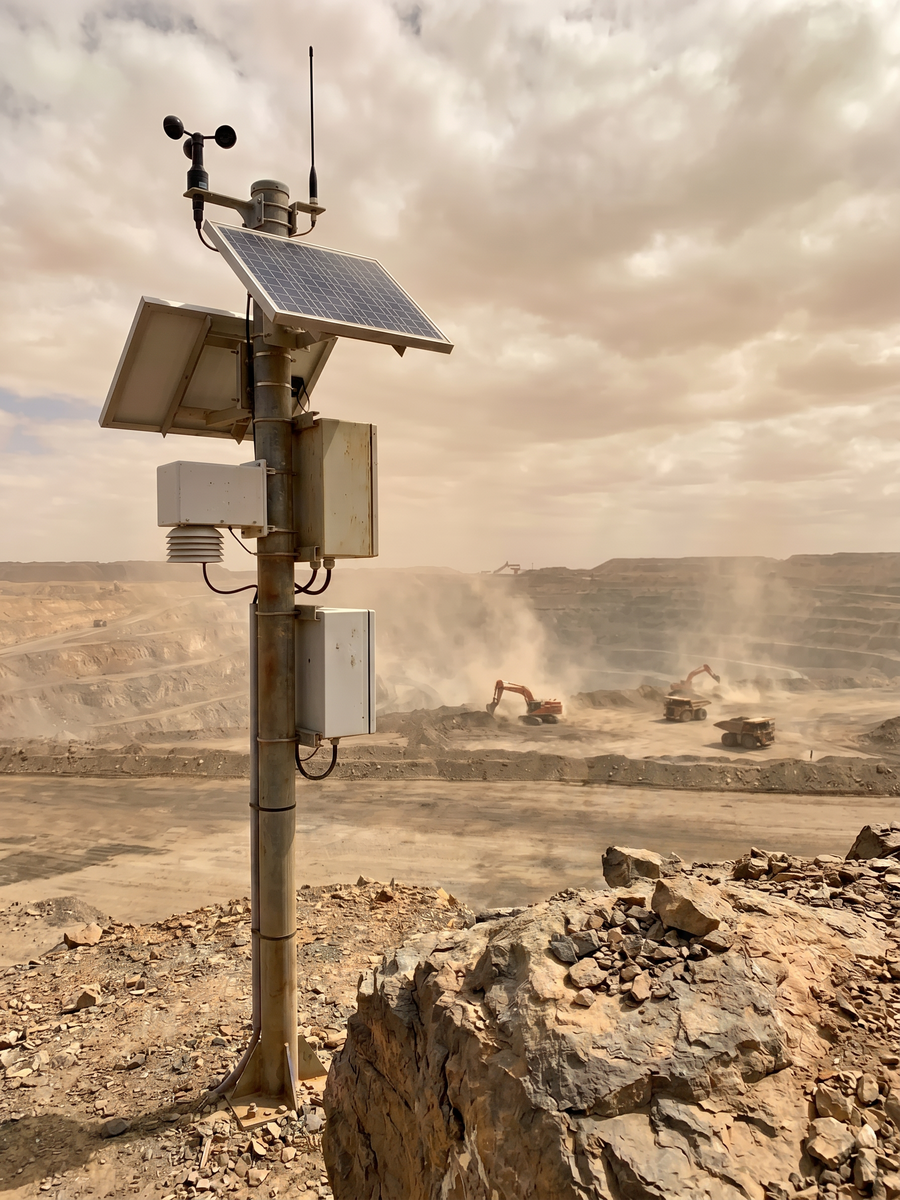
Real-time dust monitoring closes that gap. A federally funded research study that deployed APT dust sensors demonstrated how continuous monitoring can identify exposure spikes as they happen, enabling intervention within the same shift rather than after laboratory results arrive weeks later. The ability to correlate exposure data with specific tasks and locations transforms dust management from a retrospective exercise into a proactive one.
Operations that rely solely on periodic sampling often discover problems too late. The hidden costs of poor silica exposure data compound over time, affecting both worker health outcomes and the operational burden of compliance. The MSHA silica standard now demands a level of exposure characterization that periodic grab samples struggle to provide, making continuous monitoring increasingly relevant for silica monitoring and testing programs.
Frequently Asked Questions
Q: What early symptoms of silicosis should prompt medical evaluation?
A persistent cough, worsening shortness of breath with routine activity, unusual fatigue, or unexplained chest tightness should be discussed with a clinician, especially if you have a history of dusty work. Many people dismiss early changes as being out of shape or having a cold, which can delay appropriate testing.
Q: What tests do clinicians typically use to evaluate suspected silicosis?
Evaluation often includes pulmonary function tests, oxygen saturation assessment, and imaging, commonly starting with a chest X-ray and sometimes a high-resolution CT for more detail. Clinicians may also order lab work or infectious disease screening to rule out other causes of symptoms.
Q: Can silicosis affect eligibility for disability or workplace benefits?
It can, because functional limitations and documented occupational exposure may support a claim, but eligibility rules vary by jurisdiction and insurer. Keeping a clear work history, exposure records, and medical documentation can make the process smoother.
Q: How can families and caregivers support someone living with silicosis day to day?
Help often centers on practical support, coordinating medical visits, encouraging adherence to prescribed inhalers or oxygen (if ordered), and reducing irritants at home such as smoke and strong fumes. Planning for activity pacing and recognizing signs of worsening breathing can also reduce emergencies.
Q: Are there specific vaccinations or preventive health steps recommended for people with silicosis?
Clinicians commonly recommend staying current on respiratory vaccines (such as influenza and pneumococcal) to reduce the risk of severe infections. Individual recommendations depend on age, health history, and local guidelines, so patients should confirm with their care team.
Q: What workplace controls are most effective beyond just wearing a respirator?
Best practice usually combines engineering controls like wet methods, local exhaust ventilation, and isolation of high-dust tasks, plus administrative controls such as task rotation and housekeeping protocols. Respiratory protection is typically the last line of defense and works best when paired with fit testing and a full respiratory protection program.
Q: What questions should workers ask their employer about silica exposure management?
Ask how exposures are measured, how often monitoring is performed, what controls are in place for high-dust tasks, and how results are communicated to employees. It is also reasonable to ask about training, respirator fit testing, and what happens when readings exceed internal thresholds or regulatory limits.
The Prognosis You Prevent Is the One That Matters Most
Silicosis survival data paint a clear picture: early-stage chronic silicosis allows decades of life, while acute silicosis compresses that timeline into months. But every one of those numbers describes a disease that was already underway. The most important survival statistic is the one that never enters a cohort study, the worker who never developed silicosis because exposure was controlled from day one.
For operations managing silica-exposed workers, the path forward involves continuous, real-time exposure data that enables same-shift decisions rather than retrospective discovery. Book a personalized demo to see how APT's monitoring platform turns dust data into actionable prevention before irreversible damage begins.
Take a tour of APT's dust management platform

Vulcan Materials Company is the nation’s largest producer of construction aggregates.

Project partner
Brent Leclerc | Environmental Manager
Problems solved
Unjustified community dust complaints & lawsuits
Difficulty complying with opacity regulations and risk of NOVs
Solution
Real-time dust monitoring
Dust maps proving no community impact, preventing fines & lawsuits
Real-time opacity monitoring, high degree of compliance


.png)
Better decisions start with real-time insight
APT helps industrial teams move faster, act smarter, and stay compliant—because when you can see the problem clearly, you can solve it confidently.
