Silica exposure kills more workers than headlines suggest. Every year, more than two million people in the U.S. encounter respirable crystalline silica on the job, and the diseases it causes, silicosis, lung cancer, COPD, are irreversible once they take hold. A written control plan is supposed to prevent that outcome. The problem is that most plans collect dust faster than the worksites they're meant to protect.
A plan that "actually works" does more than check regulatory boxes. It connects exposure data to specific job tasks, assigns accountability to real people, and updates itself when conditions change. This guide walks through every component you need, the mistakes that trip up even experienced safety teams, and a practical checklist you can adapt to your own operation.
What Is a Silica Exposure Control Plan?
A silica exposure control plan is a written document that spells out exactly how an employer identifies, evaluates, and reduces worker contact with respirable crystalline silica. Think of it as the operating manual that ties together air monitoring results, engineering fixes, respiratory protection, medical checkups, and training into a single, auditable system.
OSHA's construction standard (29 CFR 1926.1153) and general industry standard (29 CFR 1910.1053) both require a written plan when workers perform tasks that generate silica dust above the action level of 25 µg/m³ as an 8-hour time-weighted average (TWA). The plan is not a one-and-done form. OSHA's Recommended Practices framework (OSHA 3885) treats the document as a living system: one that embeds leadership commitment, worker participation, and continuous improvement cycles into every element.
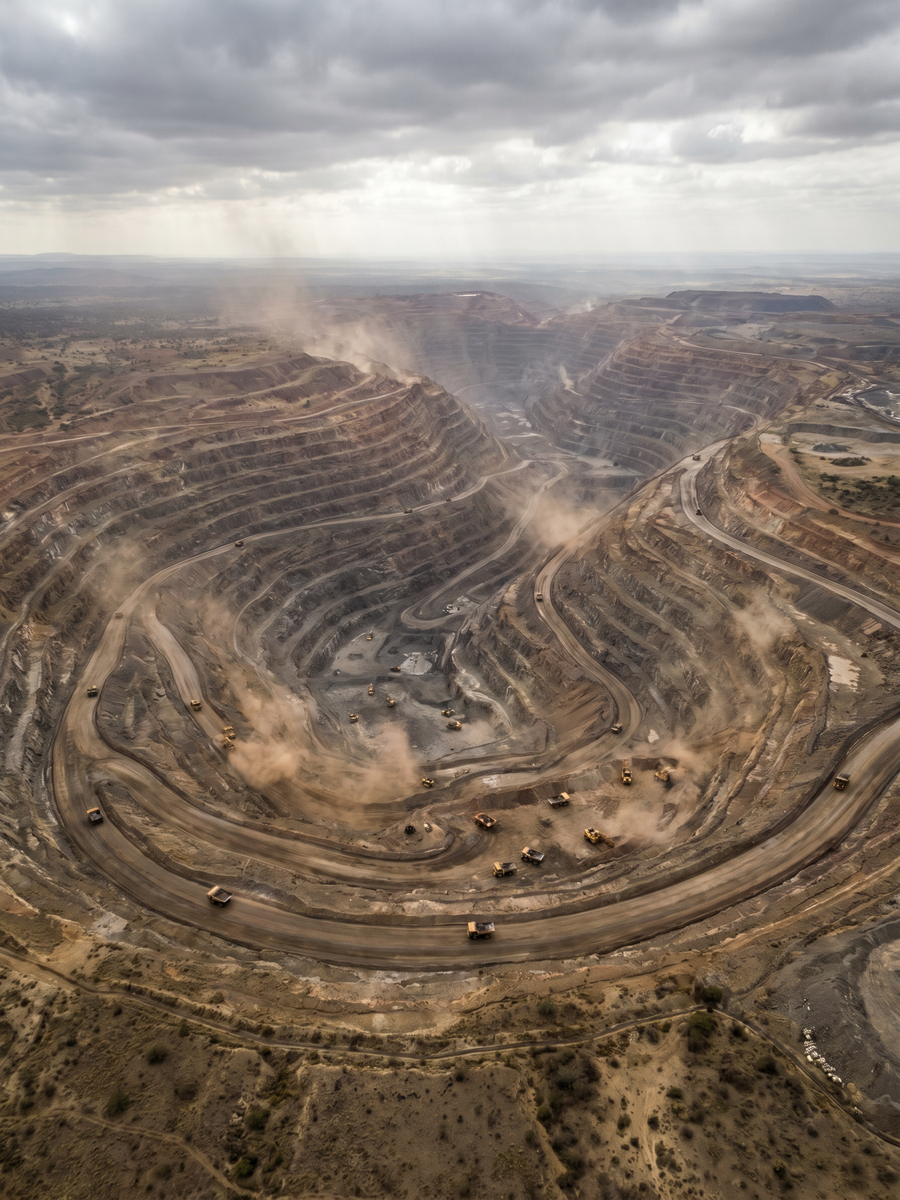
For mining operations, the stakes just got higher. A Federal Register rule published in April 2026 confirms that MSHA's permissible exposure limit drops to 50 µg/m³ with a 25 µg/m³ action level. If your operation falls under MSHA jurisdiction, understanding the MSHA silica standard is no longer optional reading.
When Is One Required?
The short answer: whenever workers could be exposed above the action level. In construction, employers can either follow OSHA's Table 1 (pre-set controls for 18 common tasks) or conduct exposure assessments to determine the right controls. If you go the assessment route, a written plan is mandatory. In general industry and maritime, the written plan kicks in whenever monitoring shows exposures at or above the action level.
Mining operations now face parallel requirements under the MSHA silica rule. The trend is clear globally, too. Research from Australia's workplace exposure data shows the national standard fell from 0.1 mg/m³ to 0.05 mg/m³ in 2020, with a further reduction to 0.025 mg/m³ proposed for 2025–2026. If you operate internationally or simply want to future-proof your plan, designing to the lowest anticipated limit saves rework later.
Components of an Effective Silica Control Plan
A compliant plan needs seven interlocking pieces. Skimp on any one of them and the whole framework weakens. Here's what each component demands in practice.
1. Exposure Assessment
This is the foundation. You need representative air-sampling data that tells you who is exposed, to how much, and during which tasks. Traditional gravimetric sampling (filter cassettes analyzed by a lab) remains the regulatory gold standard for compliance documentation. But a single 8-hour sample may miss short-duration spikes that drive real-world risk.
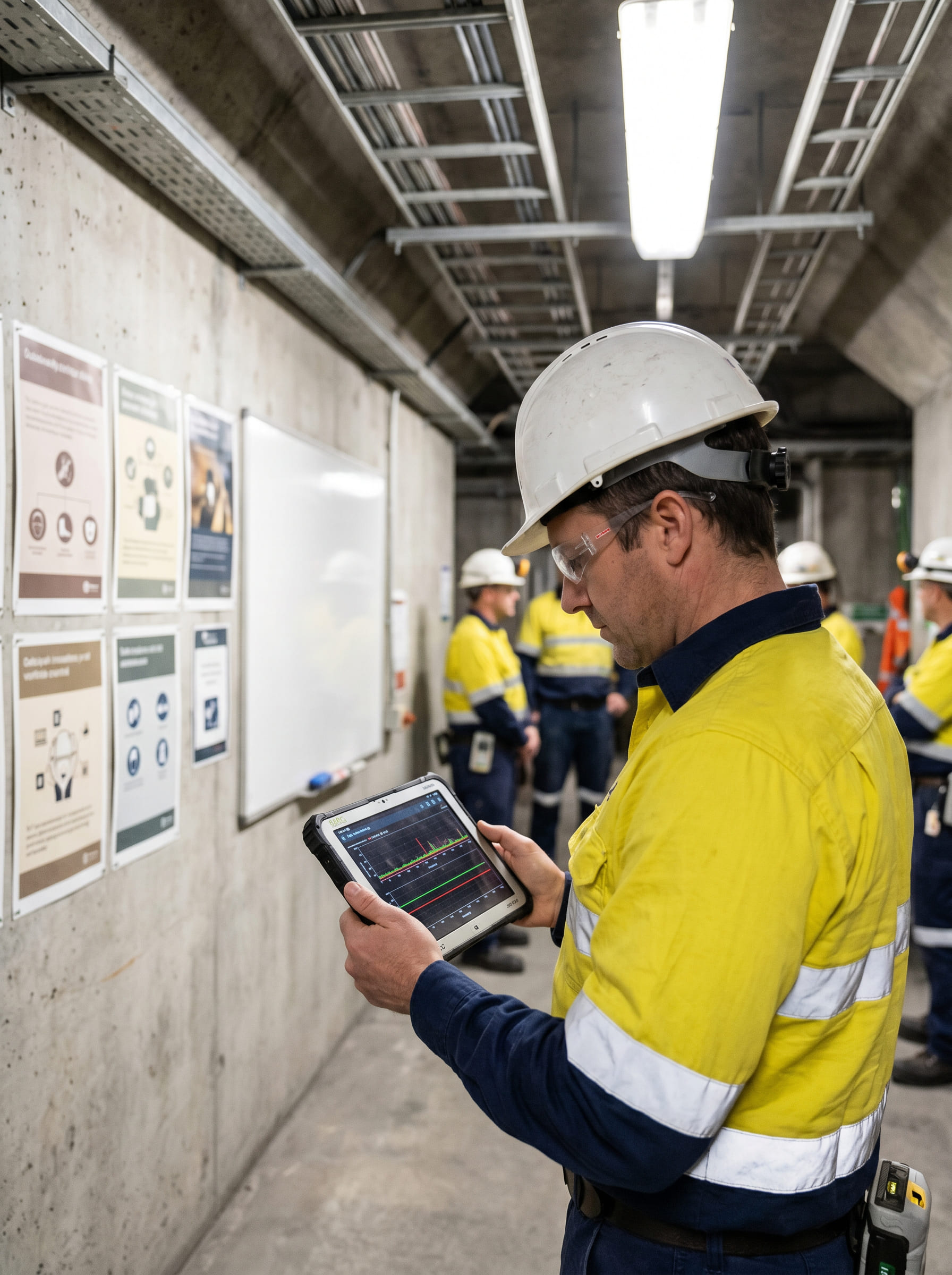
Real-time direct-reading instruments fill that gap by delivering minute-by-minute dust concentration data. Pairing both methods gives you defensible compliance numbers and the operational insight to pinpoint exactly when and where controls fail. If you're building out a monitoring program, a solid foundation in worker exposure monitoring practices will save you from collecting data you can't actually use.
2. Engineering Controls
Engineering controls are your first line of defense. They physically remove silica dust from the breathing zone or prevent it from becoming airborne in the first place. Common examples include wet-cutting methods for concrete and masonry, local exhaust ventilation on grinders and drills, and enclosed operator cabs with filtered air.
The key is matching the control to the task. A water-suppression system that works for a stationary saw won't help a worker doing overhead demolition. Your plan should list each silica-generating task, the specific engineering control assigned to it, and the maintenance schedule that keeps the control effective.
3. Work Practice Controls
Even the best engineering controls degrade if workers bypass them. Work practice controls address the human side: housekeeping procedures that prevent dust accumulation, prohibitions on dry sweeping or compressed-air blowdown, and scheduling high-dust tasks when fewer workers are in the area.
4. Respiratory Protection
Respirators are the last resort, not the first response. When engineering and work practice controls can't bring exposures below the PEL on their own, your plan must specify the type and assigned protection factor of the respirator required for each task. That means proper fit testing, a written respiratory protection program (per 29 CFR 1910.134), and training on inspection, donning, and storage.
5. Medical Surveillance
Workers exposed above the action level for 30 or more days per year must receive medical exams. These typically include a chest X-ray, pulmonary function test, and health history questionnaire. The examining physician or licensed health care professional provides a written medical opinion to both the employer and the worker. Your plan should detail who qualifies, the exam schedule, and how you'll handle findings that require job reassignment or additional monitoring.
6. Training
Training goes beyond a one-time toolbox talk. Workers need to understand the health hazards of respirable crystalline silica, the specific controls in place at their worksite, and how to use those controls correctly. Supervisors carry additional responsibility: they need to recognize when controls fail and know how to escalate. Annual refreshers and task-specific updates after process changes keep knowledge current.
7. Recordkeeping
You must retain exposure-monitoring records for at least 30 years and medical surveillance records for the duration of employment plus 30 years. That's not a typo. Silica-related diseases have latency periods measured in decades. Good recordkeeping also means documenting every plan revision, every corrective action, and every training session. When an inspector shows up, these records are your evidence that the plan isn't just paper.
Common Mistakes That Undermine Silica Control Plans
The most frequent failure isn't missing a required section. It's writing a plan that looks complete but never connects to real conditions on the ground. Here are the patterns we see most often.
Copy-paste templates used without customization. A generic plan from the internet won't reference your specific tasks, equipment, or exposure data. University of Wisconsin–Milwaukee demonstrated that even a templated approach succeeds only when each department customizes the template for its own high-exposure worksites and submits it for auditing. The template is the starting point, not the finish line.
Relying on respirators instead of engineering controls. OSHA's hierarchy of controls exists for a reason. Inspectors will question why you're handing out N95s instead of installing a vacuum-shrouded grinder. Respirators should appear in your plan as a supplement, not a substitute.
Stale exposure data. If your last air-monitoring campaign was three years ago but you've changed processes twice since then, your plan is built on assumptions. Understanding the hidden costs of poor silica exposure data helps justify the investment in updated sampling.
No accountability structure. Plans that list controls without naming who installs, maintains, and verifies them tend to drift. Assign ownership by role, not just by department.
Template and Checklist for Your Silica Control Plan
Before drafting from scratch, use this checklist to verify your plan covers every regulatory requirement and operational need.
- Hazard identification: List every task that generates respirable crystalline silica, including the materials involved and typical duration
- Exposure assessment data: Attach or reference current air-monitoring results for each task, along with sampling methodology and lab reports
- Engineering controls by task: Specify the control, the responsible party, and the maintenance frequency
- Work practice procedures: Document housekeeping standards, prohibited practices, and scheduling protocols
- Respiratory protection assignments: Match respirator type and protection factor to each task where engineering controls alone are insufficient
- Medical surveillance schedule: Identify eligible workers, exam components, and the healthcare provider
- Training plan: Outline initial and refresher training content, delivery method, and documentation
- Recordkeeping system: Define where records are stored, who maintains them, and the retention timeline
- Review and update triggers: Specify what events prompt a plan revision (process changes, new monitoring data, regulatory updates, incident reports)
Keep the plan accessible. A document buried on a shared drive helps nobody. The most effective programs post task-specific control summaries at the worksite itself.
How to Keep Your Plan Current
A silica exposure control plan is only as good as its last update. Schedule formal reviews at least annually, and trigger additional reviews whenever you introduce new equipment, change processes, or receive monitoring results that exceed expected levels.
Real-time silica monitoring and testing technology makes continuous improvement practical rather than aspirational. Instead of waiting for lab results weeks after a sampling event, real-time data lets you identify control failures the same shift they happen. That speed matters when exposure limits are tightening and the margin for error is shrinking.
Assign a named plan administrator, not a committee, a single person with authority to approve revisions and enforce compliance. Document every change with the date, the reason, and the evidence that triggered it. Auditors want to see a revision history, not just a current version.
Frequently Asked Questions
Q: How do I choose which job roles to sample first when launching silica monitoring?
A: Start with roles that perform the dustiest tasks most frequently, then include nearby workers who may be exposed as bystanders. Prioritize tasks with the highest uncertainty, such as variable environments, changing materials, or inconsistent control use, so your early data answers the biggest risk questions.
Q: What should a clear “owner” and accountability structure look like in a silica control plan?
A: Define a single plan administrator with authority to approve updates, then assign task-level owners for controls, maintenance, and verification. Make responsibilities measurable, for example who checks water flow each shift, who inspects ventilation weekly, and who signs off on corrective actions.
Q: How can we improve worker participation without slowing production?
A: Build quick feedback loops, such as short pre-task huddles and a simple way to report control failures in the field. Involve operators in selecting and trialing controls, because usability issues are often the real reason controls get bypassed.
Q: How do I write task-based control summaries that workers will actually use?
A: Use one page per task with plain-language steps, required equipment, and a short “stop work” checklist for control failures. Add photos of the correct setup and keep it specific to the tools and materials used at your site to eliminate interpretation.
Q: What should we do when monitoring results contradict what Table 1 controls are supposed to achieve?
A: Treat it as a validation problem, first confirm instrument calibration, sampling strategy, and whether the task matched the assumed conditions (tool type, duration, water flow, ventilation). If results still trend high, document the gap and adjust controls or work practices rather than assuming the table alone will satisfy regulators.
Q: How can we manage contractor and multi-employer worksite responsibilities for silica control?
A: Align on a shared task list, designated competent persons, and site rules for prohibited practices before work begins. Require contractors to provide their control methods and training documentation, then verify in the field that controls are installed and functioning as agreed.
Q: What are practical ways to audit control effectiveness beyond compliance paperwork?
A: Use routine field inspections focused on leading indicators, such as water delivery rate, vacuum airflow, filter condition, and enclosure integrity, not just presence of equipment. Pair these checks with short observational audits of worker behavior to confirm controls are used correctly and consistently.
Turn Your Plan into a Working System
A silica exposure control plan that works is one that changes when conditions change. It connects air-monitoring data to specific controls, holds named individuals accountable, and treats every revision as an opportunity to reduce risk rather than a compliance headache. The regulatory direction is unmistakable: exposure limits will continue to tighten, and plans that barely meet today's PEL won't survive tomorrow's.
Applied Particle Technology helps industrial and mining teams close the gap between data collection and real-world dust control. Our platform pairs real-time dust sensors with software that turns exposure data into targeted, defensible action. If your current plan depends on outdated sampling or disconnected spreadsheets, explore how APT's platform gives your safety team the visibility to act before exposures become violations.
Take a tour of APT's dust management platform

Vulcan Materials Company is the nation’s largest producer of construction aggregates.

Project partner
Brent Leclerc | Environmental Manager
Problems solved
Unjustified community dust complaints & lawsuits
Difficulty complying with opacity regulations and risk of NOVs
Solution
Real-time dust monitoring
Dust maps proving no community impact, preventing fines & lawsuits
Real-time opacity monitoring, high degree of compliance




Better decisions start with real-time insight
APT helps industrial teams move faster, act smarter, and stay compliant—because when you can see the problem clearly, you can solve it confidently.
