A single blast at an open-pit mine can send thousands of tons of particulate into the air, and most of it never reaches a stack or a vent. That uncontrolled airborne material is fugitive dust, and it accounts for the majority of particulate matter emissions at mining and industrial operations. Unlike point-source pollution that exits through a chimney, fugitive dust escapes from roads, stockpiles, conveyors, and dozens of other surfaces that regulators still expect you to control.
This guide breaks down where fugitive dust comes from, which regulations apply, and how to build a control plan that actually holds up during an inspection. Whether you run a coal mine, aggregate pit, or bulk materials terminal, you'll find source-specific control methods and monitoring strategies you can put to work immediately.
What Is Fugitive Dust?
Fugitive dust refers to airborne particulate matter that does not pass through a stack, chimney, or other engineered emission point. It's generated by mechanical disturbance of soil and materials, wind erosion across exposed surfaces, and vehicle traffic on unpaved roads. The particles range from coarse visible dust (PM10) down to fine respirable fractions (PM2.5) that penetrate deep into the lungs.
What makes fugitive dust especially challenging is its diffuse nature. A point source like a boiler has a single exhaust you can monitor and treat. Fugitive emissions, by contrast, originate from dozens of locations across a site simultaneously. That diffuse footprint makes measurement harder and control more resource-intensive.
Health and Environmental Risks Worth Taking Seriously
Prolonged exposure to fine particulate, especially crystalline silica common in mining operations, causes silicosis, chronic obstructive pulmonary disease, and elevated lung cancer risk. Workers on haul roads and near crushing operations face the highest exposure levels. Communities downwind of industrial sites bear a secondary burden through degraded air quality and reduced visibility.
Environmental damage extends beyond human health. Dust deposition alters soil chemistry in adjacent ecosystems, smothers vegetation, and degrades water quality in nearby streams and wetlands. For operations near sensitive receptors like schools or residential areas, even moderate fugitive dust opacity levels can trigger complaints and regulatory scrutiny.
Common Sources of Fugitive Dust at Mining and Industrial Sites
Effective control starts with understanding exactly where your dust originates. Not every source demands the same treatment, and misallocating resources toward low-priority areas while neglecting high-emission zones is one of the most common mistakes sites make. Below are the primary sources ranked roughly by their typical contribution to total site emissions.
Haul Roads
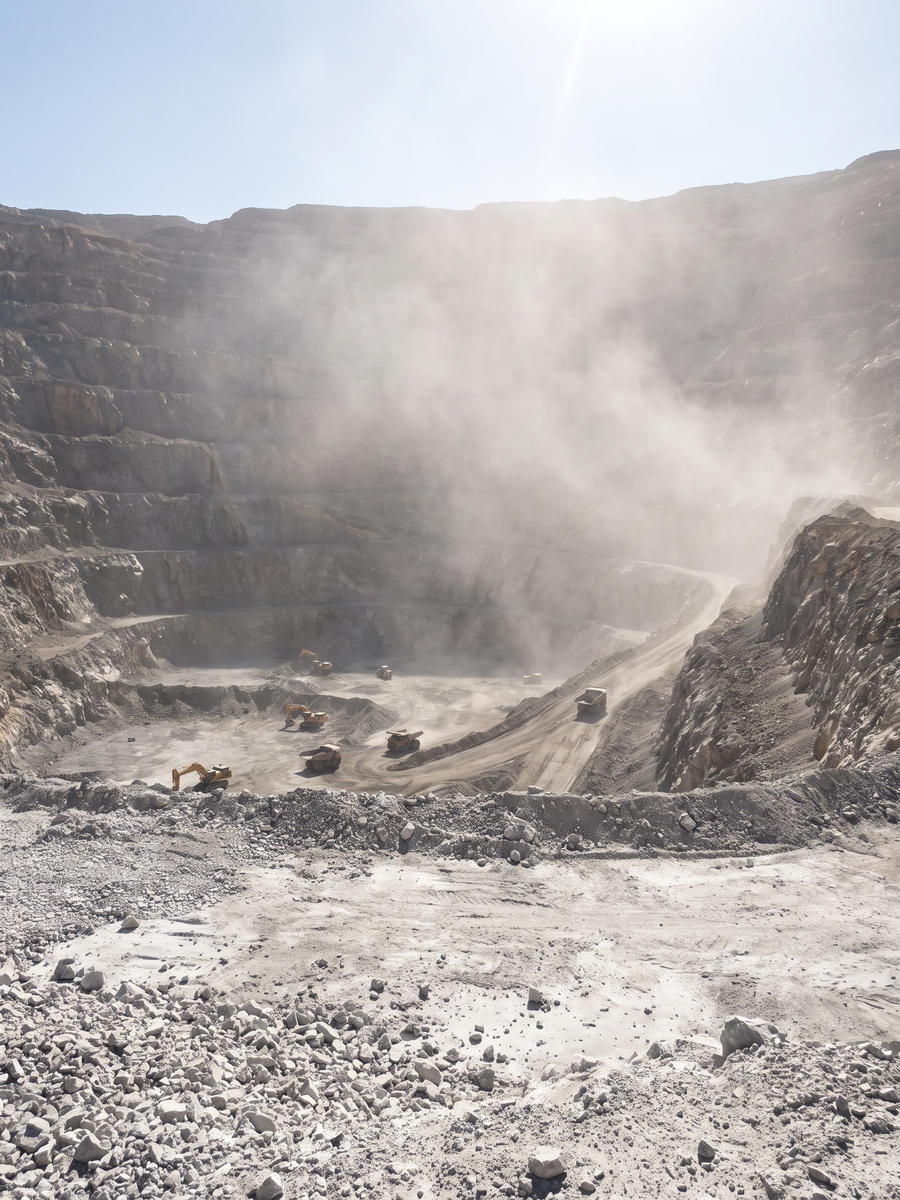
Unpaved haul roads are almost always the single largest source of fugitive dust at a mine site, sometimes accounting for 60% or more of total particulate emissions. Every truck pass pulverizes surface material, and higher speeds generate exponentially more dust. EPA best-practice guidance recommends vehicle speed limits of 5 mph in unpaved areas as one straightforward measure to cut haul-road emissions.
That said, a 5 mph limit is impractical for most production haul roads. The real-world approach combines reduced speed policies (often 15 to 25 km/h) with water application, chemical suppressants, or aggregate surfacing. The right mix depends on traffic volume, climate, and proximity to sensitive receptors.
Stockpiles
Material stockpiles emit dust through two mechanisms: wind erosion across exposed surfaces and mechanical disturbance during stacking and reclaiming. Tall, steep-sided piles with fine material on top are the worst offenders. Wind fences, chemical crusting agents, and strategic pile orientation relative to prevailing winds all reduce emissions, but none eliminates the problem entirely during active operations.
Loading and Unloading Operations
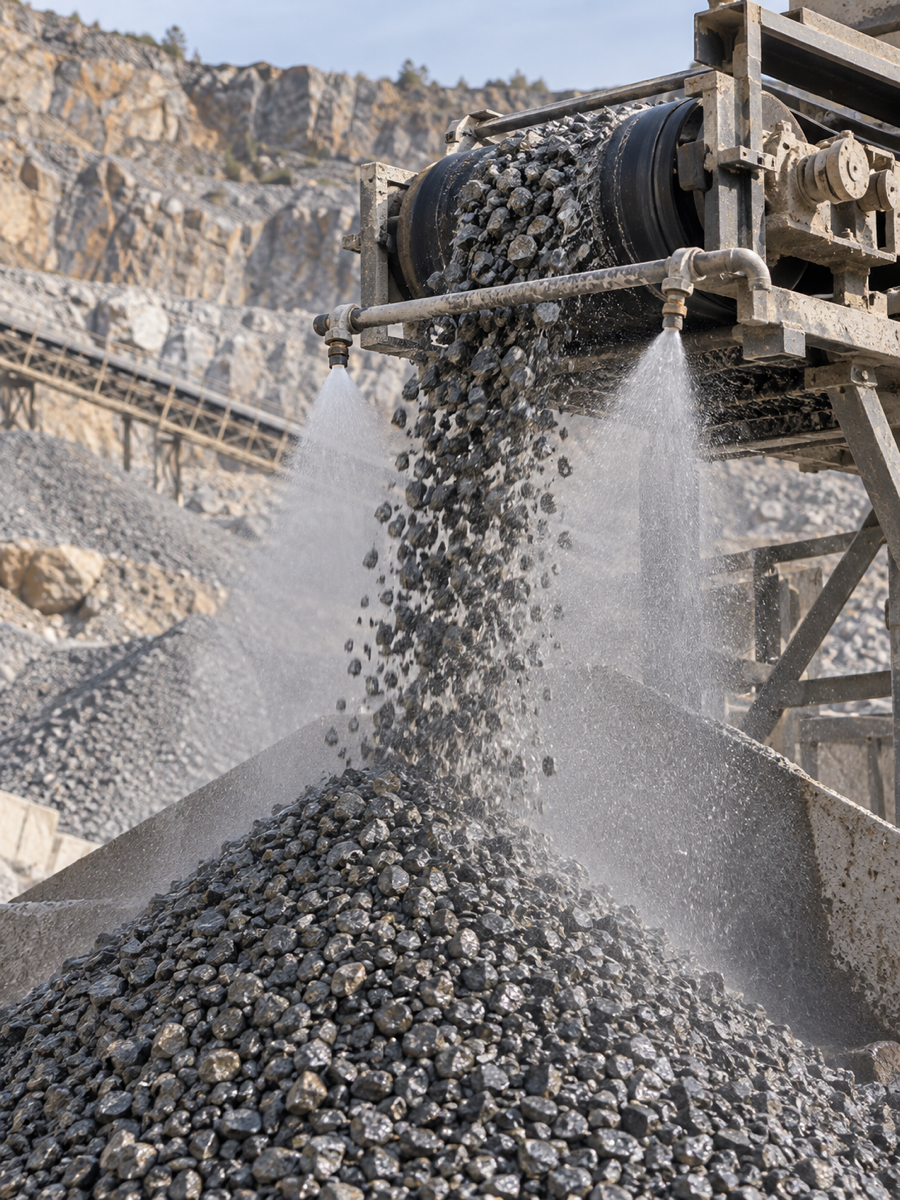
Every time material drops from a loader bucket, conveyor discharge, or railcar, the free-fall distance creates a dust plume. The taller the drop height, the worse the emissions. Minimizing drop distances, enclosing transfer points, and using telescoping chutes are the most effective engineering controls here.
Conveyors
Conveyor systems generate dust at transfer points, belt return areas, and along the belt itself when fine material becomes airborne. Enclosed conveyor galleries control the problem well but carry significant capital costs. Skirting systems, dust collection hoods at transfer points, and belt-washing stations represent more targeted solutions for existing infrastructure.
Blasting
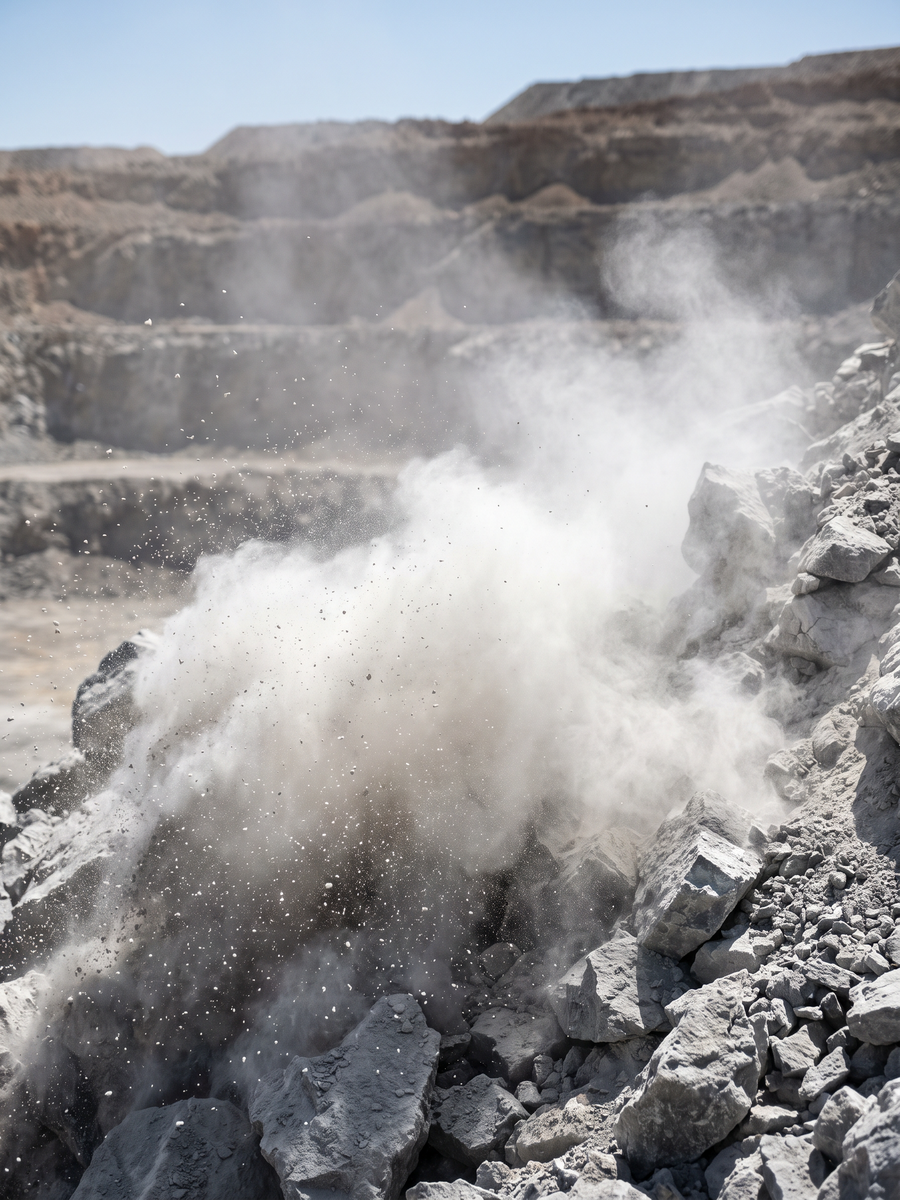
Blasting produces intense but short-duration dust events. You can minimize blast-related emissions through proper stemming, controlled blast timing (avoiding high-wind periods), and water misting deployed immediately after detonation. Blast dust is difficult to suppress entirely, so most control plans focus on scheduling blasts during favorable meteorological conditions.
Regulatory Requirements for Fugitive Dust
Regulations governing fugitive dust come from multiple overlapping agencies. Understanding which rules apply to your specific operation prevents costly enforcement actions and project delays. Here's a plain-language overview of the major regulatory layers.
EPA Federal Standards
The U.S. Environmental Protection Agency regulates particulate matter through the National Ambient Air Quality Standards (NAAQS). The current standards set a 24-hour PM2.5 limit of 35 µg/m³ and an annual PM2.5 standard of 12 µg/m³. PM10 standards sit at 150 µg/m³ over 24 hours. Operations in nonattainment areas face stricter permitting requirements and must demonstrate "reasonable further progress" toward meeting NAAQS.
MSHA (Mine Safety and Health Administration) adds another federal layer for mining operations, with permissible exposure limits for respirable dust and specific requirements for silica-bearing dust. OSHA covers industrial facilities with its own permissible exposure limits, and the combustible dust National Emphasis Program applies to operations handling materials that pose explosion risks.
State, Provincial, and Local Air District Rules
Many state and local agencies impose requirements significantly stricter than federal baselines. Maricopa County in Arizona, for example, requires fugitive dust control plans for any earth-moving activity disturbing more than 0.1 acres. South Coast AQMD in California mandates visible emission limits and specific best available control measures for dozens of industrial source categories.
Don't assume federal compliance equals local compliance. Operations near the U.S.-Canada border may face additional provincial requirements under Canadian environmental protection acts. The safest approach is to identify your most stringent applicable regulation and design your control plan around that standard.
Proven Fugitive Dust Control Methods by Source
Control strategies fall into three broad categories: engineering controls (physical barriers and system modifications), chemical controls (suppressants and binders), and administrative controls (operational practices and scheduling). The most effective programs combine all three, matched to each source's specific characteristics.
Road and Traffic Control Strategies
For unpaved roads, water application remains the most common approach. It's cheap and immediately effective, but its suppression efficiency drops rapidly in hot and arid climates, requiring frequent reapplication. Chemical suppressants like magnesium chloride and synthetic polymer emulsions last longer, sometimes controlling dust for weeks between applications, but cost more upfront and can introduce environmental concerns near waterways.
Gravel surfacing and compaction offer a more permanent solution for high-traffic routes. Organizations investing in comprehensive mining dust control programs often find that surfacing primary haul roads delivers the best long-term return on investment, even though the initial cost is substantial.
Stockpile and Material Handling Controls
Wind fences around stockpile perimeters reduce wind speed at the pile surface by 50% to 80%, depending on porosity and placement. Chemical crusting agents applied to inactive stockpile faces create a surface seal that resists wind erosion until the pile is disturbed again. For active piles, water sprays on stacking and reclaiming equipment provide real-time suppression.
Enclosed transfer points, dust collection systems, and fog cannons address loading and unloading emissions. Fog cannons are particularly useful for large, open areas where full enclosure isn't feasible. They're not a silver bullet, though. In high winds, the mist drifts away from the target area, and effectiveness drops considerably.
Building a Fugitive Dust Control Plan That Passes Inspection
A written control plan isn't just a regulatory checkbox. It's the operational document your site supervisors, equipment operators, and environmental staff use daily. A well-built plan ties specific controls to specific sources, assigns clear responsibilities, and includes triggers for escalation when conditions change.
Source Inventory and Risk Ranking
Start by cataloging every dust-generating activity on your site. Rank each source by emission potential, proximity to sensitive receptors, and regulatory exposure. A haul road next to a property boundary will always outrank an internal road with no nearby receptors, even if both produce similar dust volumes.
The aggregate operation at CBM Aggregates' Safarik Pit in Ontario provides a useful model. Their Best Management Practices Plan tied specific controls to risk-ranked sources, including 25 km/h speed limits, watering rates of 1 L/m² after 24 hours of dry conditions, wheel-wash stations, and scheduled inspections. The structured approach secured their Class "A" pit licence and reduced opacity complaints.
Control Selection and Documentation
For each ranked source, assign primary and backup control measures. Document the trigger conditions for each control: at what wind speed do you deploy fog cannons? After how many dry hours do you water roads? What visual opacity threshold triggers corrective action? These specifics are exactly what regulators look for during inspections.
Include a training component. Operators who understand why they're slowing down on haul roads or activating sprays at transfer points comply more consistently than those following instructions they don't understand. The South Coast AQMD has invested in multi-day Air Quality Academy training modules covering low-cost PM sensors and corrective-action workflows, recognizing that staff knowledge directly affects compliance outcomes.
Monitoring Fugitive Dust Emissions in Real Time
You can't manage what you don't measure, and periodic manual observations aren't enough anymore. Modern monitoring approaches combine continuous particulate sensors, meteorological stations, and software platforms that convert raw data into actionable alerts.
Continuous Monitoring Technology
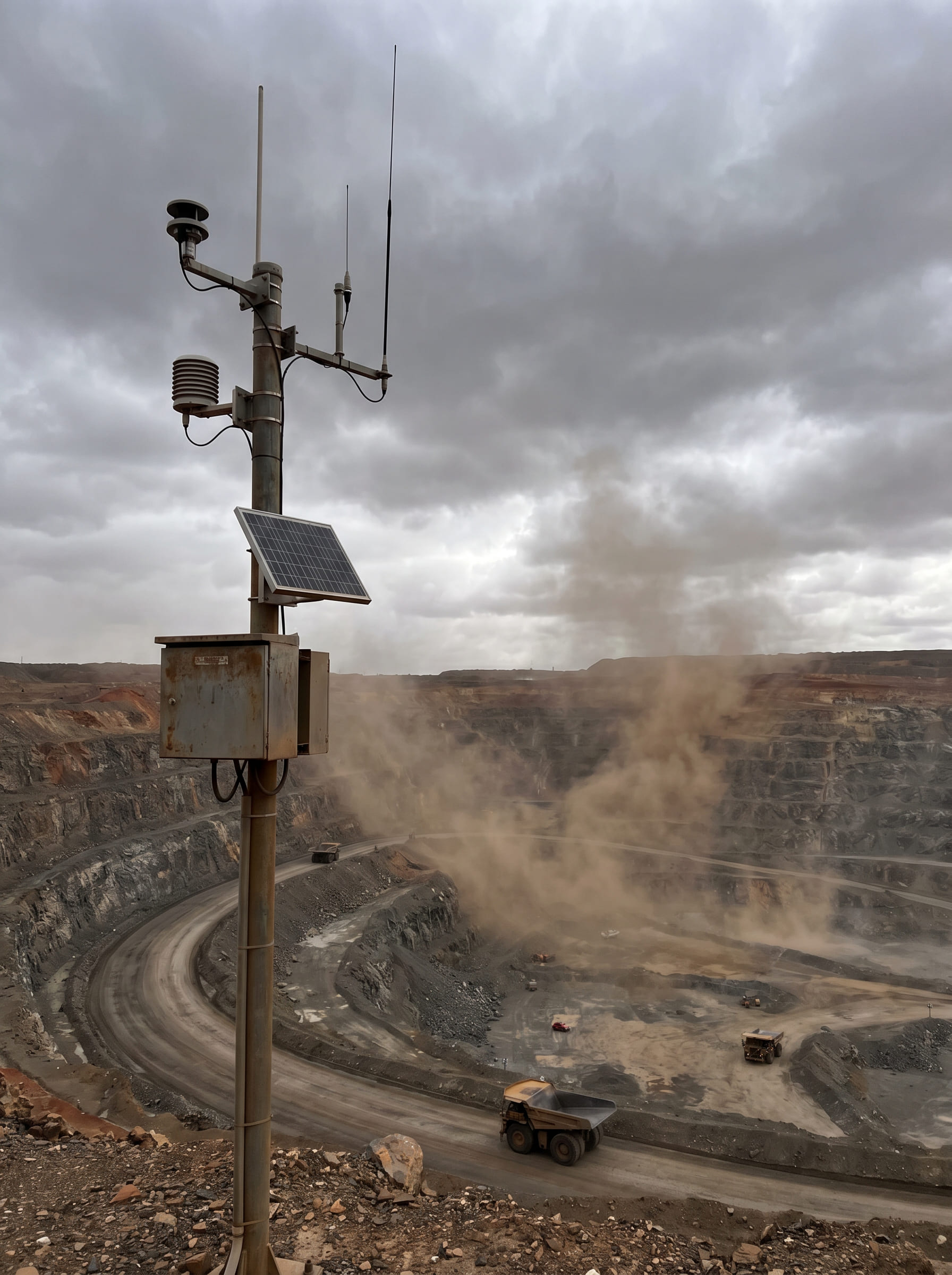
Networked PM10 and PM2.5 sensors placed at site boundaries, along haul roads, and near sensitive receptors provide real-time concentration data. When a sensor detects levels approaching a threshold, automated alerts notify operations teams so they can activate controls before an exceedance occurs. This proactive approach marks a significant shift from the old model of waiting for a visible dust complaint and then reacting.
Applied Particle Technology's dust monitoring system integrates real-time sensor data with software that maps concentrations across a site, helping environmental teams identify exactly which source is driving an increase and respond accordingly. That source-specific intelligence matters because applying water everywhere when only one haul road segment is the problem wastes resources and water.
Interpreting Your Data for Compliance and Operations
Raw PM readings mean nothing without context. Wind direction, humidity, and operational activity all influence what your sensors report. Your monitoring platform should overlay meteorological data with particulate readings so you can distinguish between dust from your operations and background contributions from off-site sources.
Keep detailed records. Regulators increasingly expect continuous monitoring data as part of compliance demonstrations, and documented case studies showing how your controls reduced measured concentrations carry far more weight than generic best-practice claims. Build your record-keeping around your permit conditions, tracking daily averages, peak concentrations, and any exceedance events alongside the corrective actions you took.
Frequently Asked Questions
Q: How do I choose between water, salts, and polymer suppressants for unpaved roads?
A: Compare them based on climate, application frequency, and any runoff restrictions on your site. Water is simple but short-lived, salts can be effective in some conditions but may raise corrosion and vegetation concerns, and polymers often last longer but require good surface prep and careful application.
Q: What are practical ways to reduce dust while conserving water during dry seasons?
A: Use targeted watering based on real-time conditions instead of fixed schedules, prioritize the highest-traffic segments, and combine watering with grading and compaction to reduce loose fines. Some sites also add reuse water systems or shift to longer-lasting surface treatments where water scarcity is a persistent risk.
Q: How should we set dust action levels and alerts so teams respond consistently?
A: Define tiered triggers that tie sensor readings and weather conditions to specific actions, with clear owners and response times. Start conservative, then refine thresholds after a few weeks of data so alerts match real operating reality and do not create alarm fatigue.
Q: How can we tell whether high PM readings are coming from our site or from off-site sources?
A: Use upwind and downwind monitoring points, correlate spikes with wind direction and site activity logs, and review timing against nearby events like regional traffic, farming, or wildfires. Establishing a baseline during low-activity periods also helps you separate background from operational contributions.
Q: What maintenance practices prevent dust control equipment from quietly losing effectiveness?
A: Build a routine inspection checklist for nozzles, pumps, hoses, and transfer point seals, then track failures and repairs like any other reliability program. Calibration checks for sensors and periodic verification of spray coverage can prevent underperformance that is not obvious until a complaint or exceedance occurs.
Q: How do we justify dust control spending to operations and finance teams?
A: Frame the business case around avoided downtime, fewer complaints, reduced cleanup and equipment wear, and lower risk of enforcement-related delays. It also helps to quantify productivity impacts, for example, better visibility and fewer housekeeping interruptions, alongside compliance benefits.
Q: What should we communicate to nearby communities to reduce dust-related complaints and build trust?
A: Share a simple overview of your monitoring approach, response protocols, and a clear point of contact for concerns. Providing periodic updates during high-risk periods (dry, windy, or high-activity days) and explaining what actions you take when readings rise can improve transparency and reduce escalations.
From Reactive to Proactive Dust Management
The gap between sites that struggle with fugitive dust compliance and those that manage it smoothly almost always comes down to one thing: whether the program is reactive or proactive. Reactive programs wait for complaints, visible plumes, or enforcement notices. Proactive programs use ranked source inventories, matched controls, and continuous monitoring to catch problems before they escalate.
Building that proactive capability doesn't require unlimited resources. It requires a structured plan, source-specific controls, and monitoring that gives you real-time visibility into what's happening across your site. Emerging innovations in fugitive dust control are making sensor-driven, data-informed programs accessible even to mid-size operations.
If you're ready to move beyond guesswork, Applied Particle Technology provides the sensor hardware and intelligent software platform that turns monitoring data into targeted action. Explore how APT's integrated dust management platform can help your operation stay ahead of regulations and protect your workforce.
Take a tour of APT's dust management platform

Vulcan Materials Company is the nation’s largest producer of construction aggregates.

Project partner
Brent Leclerc | Environmental Manager
Problems solved
Unjustified community dust complaints & lawsuits
Difficulty complying with opacity regulations and risk of NOVs
Solution
Real-time dust monitoring
Dust maps proving no community impact, preventing fines & lawsuits
Real-time opacity monitoring, high degree of compliance


Better decisions start with real-time insight
APT helps industrial teams move faster, act smarter, and stay compliant—because when you can see the problem clearly, you can solve it confidently.
